Comments Off on Nepal Population 2025: Growth, Provinces & Surprising Facts
Why Is Nepal's Population Growing Slower Than You'd Think?
Facts of Nepal · Demographics
Why Is Nepal's Population Growing Slower Than You'd Think?
Everyone assumes a Himalayan country is either tiny or bursting at the seams. The real numbers tell a stranger, more interesting story.
A friendly data walk · ~6 min read · Sources: 2021 National Census & UN estimates
The first time someone asked me how many people live in Nepal, I confidently said "maybe fifteen million?" — and I was off by half. That tiny moment of being wrong is exactly why I keep digging into the real Facts of Nepal. The numbers almost never match the postcard in your head.
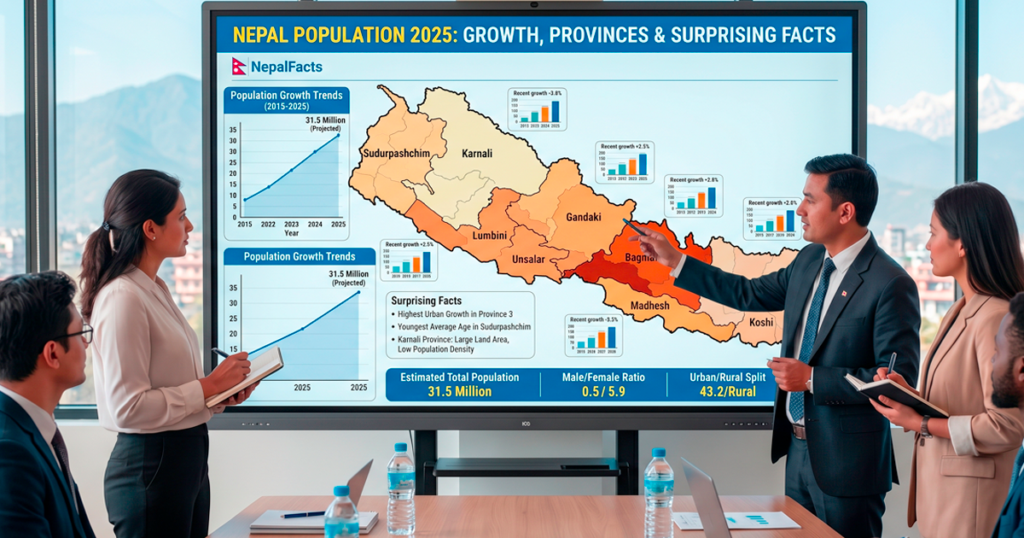
So let's settle it up front. As of the 2021 census, Nepal was home to 29,164,578 people. Newer UN estimates push that past 30 million today, and counting.
That's not a small country hiding in the mountains. That's roughly the population of Texas, squeezed into a space about the size of Arkansas — with the tallest fence on Earth running along the top.
~30 millionpeople in Nepal as of 2025
Nepal Is Bigger Than Most People Guess
Here's the thing that trips everyone up. Nepal ranks somewhere around 50th in the world by population — ahead of countries we think of as "big," like Australia and the Netherlands. We just don't picture it that way.
I think it's the geography that fools us. When a place is famous for empty, snow-capped peaks, your brain quietly assumes nobody lives there. But the mountains are the part where almost nobody lives. The crowds are somewhere else entirely — more on that in a minute.
The honest version of the Facts of Nepal is this: it's a medium-sized nation with a population that quietly tripled in a single lifetime. And that climb is worth actually looking at.
There's a population density twist too. Spread evenly, you'd get a comfortable-sounding 200 people per square kilometer. But Nepal is anything but even — Kathmandu district packs in over 5,000 people per square kilometer, while remote Manang has roughly 3. Same country, two completely different planets.
The Climb From 1950 to Today
Back in 1950, fewer than 9 million people lived in Nepal. Think about that. In about seventy years, the country added more than 20 million people — like stacking two extra Nepals on top of the original.
A population that nearly tripled in 70 years
Total population · 1950 → 2025
Approximate mid-year figures. Census years (2011, 2021) shown as solid points. Sources: UN World Population Prospects, National Census.
But notice how the slope softens near the top. That bend is the most important part of the whole chart, and it's the part the headlines usually miss.
The annual growth rate has dropped to about 0.92% — down from 1.35% just a decade earlier. The fire isn't going out, but it's clearly cooling.
Where Everyone Actually Lives
Now for my favorite part. If I'd told that the flat southern strip — not the mountains, not even the famous Kathmandu valley — holds the most people, I wouldn't have believed it.
Nepal is split into seven provinces, and they are wildly uneven. Bagmati and Madhesh each hold about a fifth of the entire country, while Karnali up in the rugged northwest holds under 6%.
Two provinces hold 40% of the country
Population by province · 2021 census
Bagmati is home to the capital, Kathmandu. Madhesh, on the southern plains, is the most densely packed. Source: National Census 2021.
The deeper pattern shows up when you slice the country by terrain instead of borders. More than half of all Nepalis live on the Terai — the warm, fertile plains along the Indian border — while the high mountains hold barely 6% of everyone.
The plains, not the peaks, hold the people
Share of population by region · 2021 census
"Terai" is the lowland plain; "Hill" the mid-elevation belt; "Mountain" the high Himalaya. Source: National Census 2021.
So the mental image of Nepal as a nation of mountain villages? Lovely, and mostly wrong. It's increasingly a nation of plains towns and a fast-growing capital, with urbanization climbing every single year.
Wait — Is Nepal About to Shrink?
Here's where I have to push back on something I hear a lot. Plenty of people still describe Nepal as "overpopulated" and "growing out of control." I understand the instinct. The total keeps rising, so it feels like a runaway train.
But the data says almost the opposite. Nepal's fertility rate has fallen to roughly 1.98 children per woman — and that's below the replacement level of 2.1. A country at that rate isn't booming; it's slowly heading toward a plateau.
The population is still growing today mainly because of momentum: there are simply a lot of young people who haven't had their kids yet. Once that wave passes, growth flattens. The real long-term worry for Nepal isn't too many people — it's an aging population and the millions of workers who leave for jobs abroad.
You see it in the villages. Walk through parts of the hills and you'll meet grandparents and grandkids, with the middle generation off working in the Gulf or Malaysia. That's not the face of overcrowding. That's the face of a country quietly exporting its workforce while its birth rate eases off.
That's the part of the Facts of Nepal that genuinely surprised me. I came in expecting an overcrowding story and walked out reading about migration and a quiet demographic shift.
So What Should You Take From All This?
If you remember three things, make it these: Nepal is bigger than it looks, most people live low rather than high, and the growth rate is slowing, not exploding.
Numbers like these change how you read every news story about the place. A headline about "rapid population growth" hits differently once you've seen the curve bending.
Your turn
Pick the one stat above that surprised you most, and go check it against a second source — I bet you'll fall down the same rabbit hole I did.
If Nepal's population is already cooling off, what do you think its biggest challenge will be in 2050 — too few young workers, or too many people leaving?
Drop your guess in the comments, and follow along for more Nepalfacts deep-dives.
Comments Off on Red Panda in Nepal: Where to Find the Himalayan Firefox
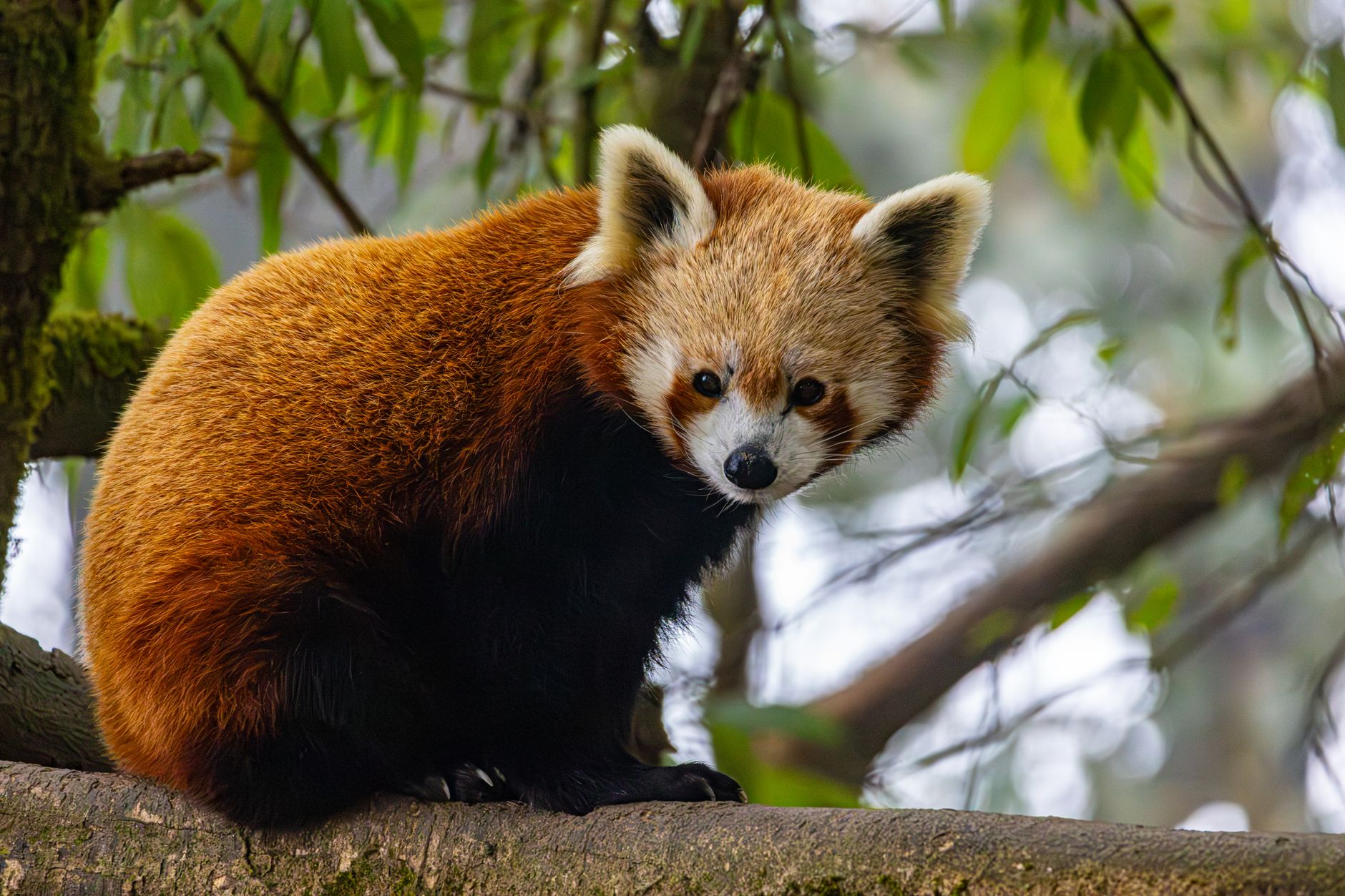
Red panda Nepal guide: where these rare “firefoxes” live, your realistic odds of spotting one, and the best trekking routes in Ilam, Taplejung and Langtang.


 Nepalfacts 09 minutes read 45 views