
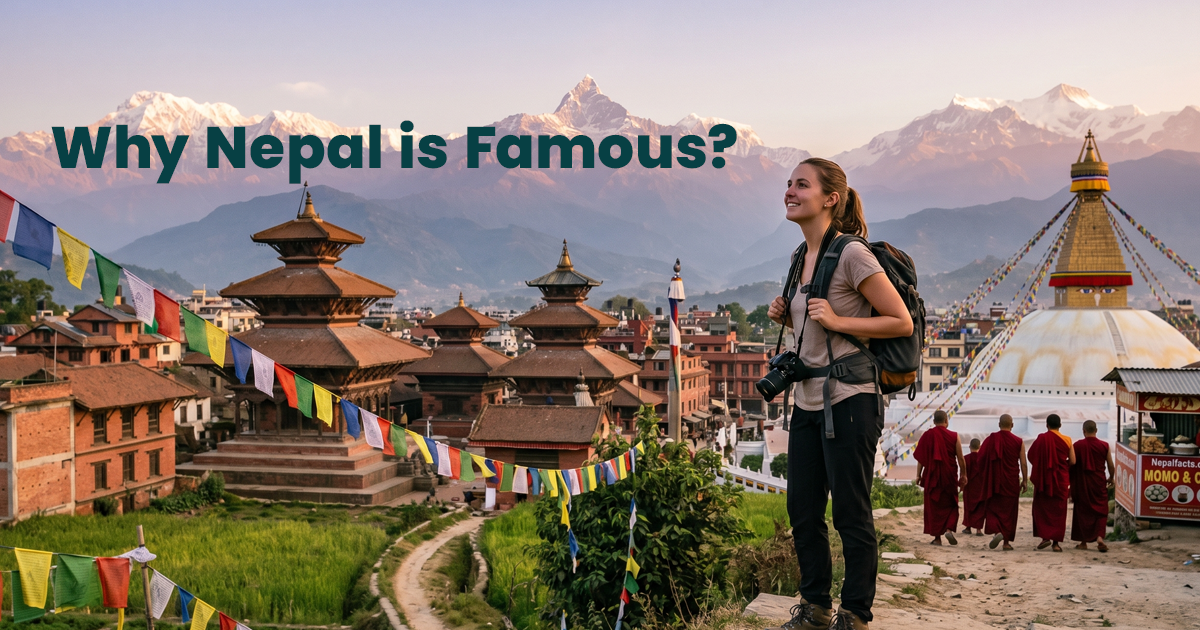
Why Nepal is famous?
Imagine you’re sitting at your desk in Sydney, desperately scrolling for a real escape from the daily grind. If […]
 Nepalfacts 05 minutes read 216 views
 The first time I sat beside the Trishuli, I tried to count how many shades of grey-green the water moved through in a single minute. I lost track around twelve. That’s the thing nobody warns you about Nepal’s water — it refuses to sit still long enough for you to describe it.
I’ve spent years chasing these rivers and lakes, notebook soggy, shoes ruined, and I still get surprised. So let me walk you through what makes them special, the kind of thing I wish someone had told me before my first trip.
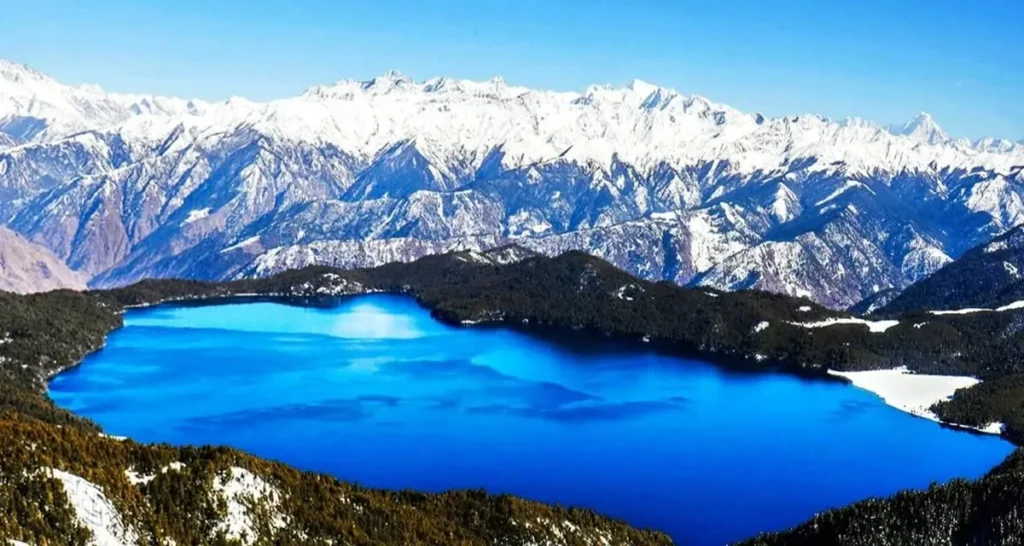
A typical snow-fed river cutting through the hills — there are thousands more where this came from.
A small country with an absurd amount of water
Here’s a fact that breaks most people’s brains. Nepal has more than 6,000 rivers, rivulets, and tributaries snaking through a country roughly the size of a single mid-sized state somewhere else.
The total rivers in Nepal stretch over 45,000 kilometres if you laid them end to end. That’s longer than the circumference of the Earth. From a landlocked nation tucked between two giants.
Most of that water starts the same way: glaciers melting, snow giving up its hold, monsoon clouds dumping their load on the high peaks. Then gravity does the rest, dragging everything south toward the Terai plains and eventually into the Ganges.
The big three you’ll actually hear about
When trekkers and locals talk about the major rivers, they almost always mean three systems. The Koshi in the east, the Gandaki in the centre, and the Karnali in the west.
These are the “first-grade” rivers, fed by glaciers and snow rather than just rain, which means they run year-round instead of drying up between monsoons. I find that distinction genuinely useful when planning a trip. A snow-fed river gives you something to look at in April; a rain-fed one might just be a sad ribbon of mud.
The Koshi is the drama queen of the bunch. Locals in India call it the “Sorrow of Bihar” because of how violently it floods downstream, and it’s actually seven rivers braided together, which is why you’ll hear it called the Sapta Koshi.
The Karnali, meanwhile, is Nepal’s longest river, and it feels like it. It carves through the remote far-west where you can go a long while without seeing a road.
And the Gandaki? That one holds my favourite fact about rivers in Nepal. The Kali Gandaki flows between Dhaulagiri and Annapurna, two of the tallest mountains on the planet, and the gorge it cuts is reckoned to be one of the deepest in the world. Standing at the bottom of it, looking up at peaks over 8,000 metres on either side, genuinely rearranges your sense of scale.
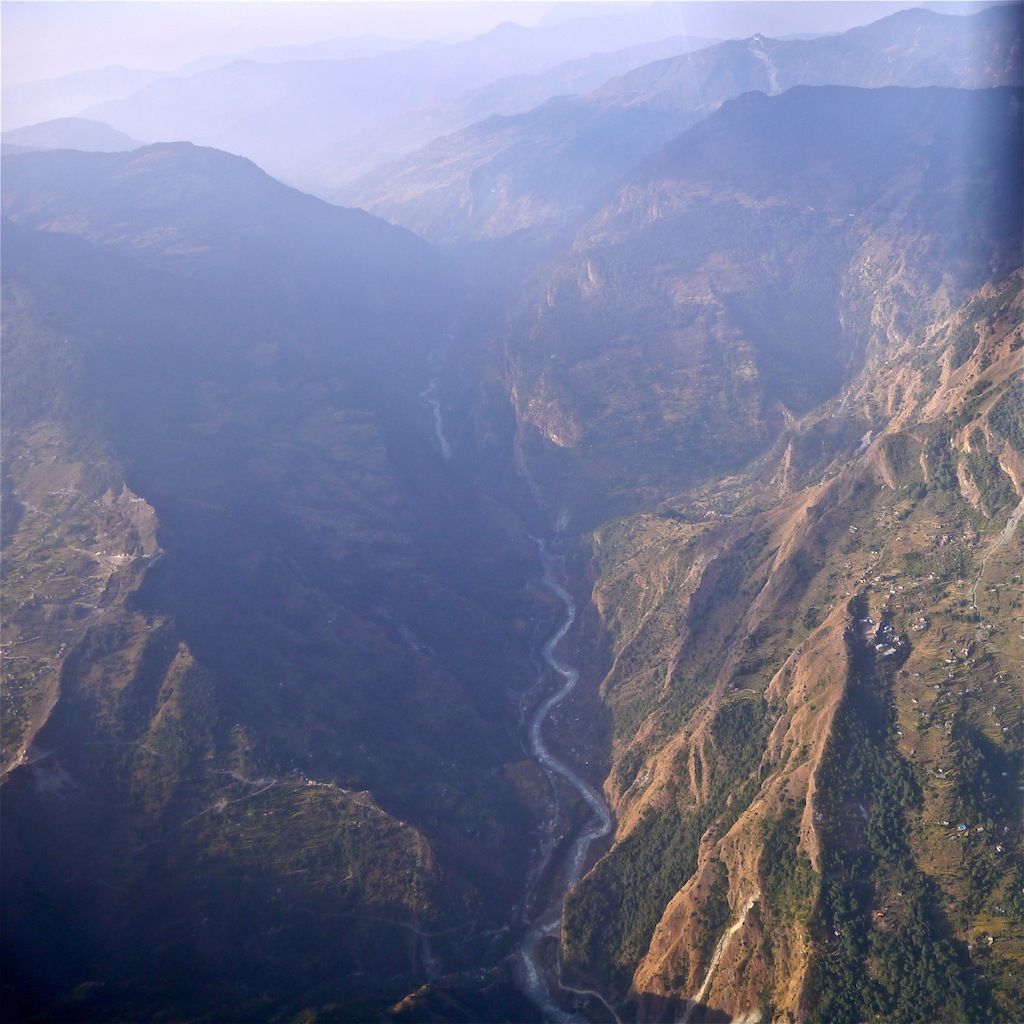
The Kali Gandaki gorge — often called the deepest on Earth.
Now the lakes, which are a completely different mood
If the rivers are restless, the lakes are where Nepal exhales. And the facts about lakes in Nepal are honestly just as wild as the rivers.
Take Rara, up in the Karnali region. It’s the largest and deepest lake in the country, covering roughly 10.8 square kilometres and plunging about 167 metres down. Sitting at nearly 3,000 metres, it’s the kind of blue that makes your photos look fake.
People who’ve been swear it changes colour several times a day depending on the light and the weather. I was skeptical until I watched it shift from deep navy to a kind of bruised purple in the span of an afternoon. Now I just nod when people tell me.
Then there’s Tilicho, which clings to the side of the Annapurna circuit at around 4,919 metres. It held a reputation for years as one of the highest lakes on Earth, and whether or not that title strictly holds today, hiking up to it still feels like reaching the roof of something.
And I can’t talk lakes without mentioning Phewa in Pokhara, because that’s where most people actually fall in love with Nepali water. It’s touristy, sure. But paddling a wooden boat across it with the Annapurnas reflected on the surface is a cliché for a reason.

*Phewa Lake in Pokhara — touristy, yes, but the reflection earns it. (Suggested image search: “Phewa Lake Pokhara boats Annapurna”)*
But aren’t they all polluted now?
I’ll be honest, because I’d rather you hear it from me than feel cheated later. Whenever I rave about all this, someone usually pushes back: aren’t Nepal’s rivers a mess of plastic and sewage, especially near the cities?
And they’re not wrong, not entirely. The Bagmati flowing through Kathmandu is, in stretches, heartbreaking. Decades of unchecked dumping turned a sacred river into something you hold your breath near.
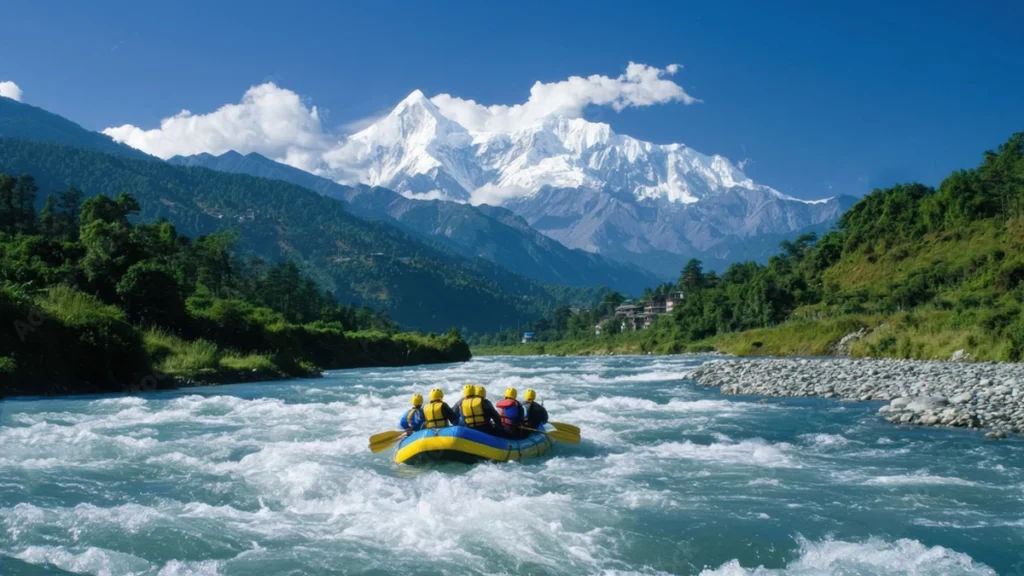
But here’s where the pushback misses the bigger picture. The Bagmati is a city problem, not a Nepal problem. Travel two hours out of the valley and the water runs clear enough to drink in places, with rapids that draw rafters from across the globe.
There’s also a genuine cleanup movement now — volunteer campaigns have hauled thousands of tonnes of waste out of the Bagmati over the past decade. It’s slow and imperfect, but writing off Nepal’s water because of one urban river is like writing off a whole library because the front desk is dusty.
Why this matters more than just being pretty
These aren’t just scenery. Nepal’s rivers irrigate the majority of its farmland, and the country’s hydropower future is basically written in glacial runoff.
That’s the part that hooked me beyond the photos. Every one of these rivers is doing real work — feeding rice paddies, spinning turbines, carrying away the monsoon. The beauty is almost a side effect.
When you start reading Nepal facts with that lens, the water stops being a backdrop and becomes the main character. The mountains get all the postcards, but the rivers are what actually built the valleys you’re hiking through.
A few honest tips before you go chasing water
If you only have time for one lake, I’d point you to Phewa for ease or Rara if you want something that feels earned and remote. They’re opposite experiences, and both are worth it.
For rivers, the Trishuli and the Bhote Koshi are your easy rafting wins near Kathmandu, while the Karnali is the multi-day expedition you brag about for years afterward. Match the river to how much discomfort you’re willing to trade for solitude.
And go in spring or autumn if you can. Monsoon turns the rivers thrilling but dangerous, and winter drains some of the colour out of the high lakes.
The deeper I go into all of this, the more I realise I’ve barely scratched the surface — there are sacred lakes like Gosaikunda and hidden alpine pools I haven’t even mentioned. That’s sort of the point of a place with thousands of rivers.
So here’s what I keep coming back to, and I’ll leave it with you. If a country this small can hold 6,000 rivers and a lake that changes colour while you watch, what else have we been driving past without stopping to look?
When are you going to come see one for yourself?

Imagine you’re sitting at your desk in Sydney, desperately scrolling for a real escape from the daily grind. If […]
Nepalfacts 06 minutes read 183 views Standing at 5,364 meters beneath the world’s highest mountain is a dream shared by trekkers everywhere — and the […]
Nepalfacts 02 minutes read 39 views At Nepal Facts, we usually write about Nepal’s rivers as places to raft, trek beside and photograph. This time […]
Nepal Travel Cost Per Day: A Real Budget Guide (2026) Travel & Tourism · Budget Guide 2026 Budget · […]