

6 Common Myths About Nepal
Myths to Stop Repeating ❌ “Nepal has 10 UNESCO World Heritage Sites.” ✅ Nepal has 4 inscribed properties: Kathmandu […]
Picture a small hill kingdom in the mid-1700s, ringed by dozens of rival principalities, each with its own king, army, and ambitions. Out of that fractured landscape came a single ruler who, through patience, alliances, and calculated warfare, brought together the territory we now know as Nepal. The Prithvi Narayan Shah unification of Nepal stands as one of South Asia’s most consequential political campaigns, turning a cluster of competing states into a single kingdom over roughly three decades starting in 1743.
Prithvi Narayan Shah was the king of Gorkha, a modest principality in the hills west of Kathmandu Valley, in present-day Gandaki Province. He is remembered today as the founder of modern Nepal, though his legacy is debated, especially among Madhesi and janajati (indigenous ethnic) communities who see his conquests as the start of long-standing political marginalization. Understanding both sides of this story helps explain Nepal as it exists today.
Prithvi Narayan Shah was a Shah dynasty king who ruled the small hill kingdom of Gorkha starting in 1743 and spent more than three decades expanding its territory through diplomacy, strategic alliances, and military campaigns. He is widely regarded as the founder of the unified Nepali state.
Gorkha was tiny compared with the wealthy, culturally sophisticated kingdoms of Kathmandu Valley. But Prithvi Narayan Shah recognized an advantage his rivals underestimated: geography. Gorkha sat along trade routes linking India and Tibet, and its hill terrain produced soldiers accustomed to mountain warfare. He built his early military strategy around this, training a disciplined force that became the core of the Gorkhali army, whose legacy is often linked to today’s Gurkha soldiers.
Before unification, the region now called Nepal was a patchwork of dozens of small kingdoms and principalities; historians generally cite figures in the range of 46 to 54, though exact counts vary. The most prominent were the three Malla kingdoms of Kathmandu Valley: Kathmandu, Patan (Lalitpur), and Bhaktapur, each ruled by a branch of the same royal tradition yet locked in frequent rivalry.
Beyond the valley, clusters of smaller states known as the Chaubisi Rajya (a group of roughly twenty-four principalities) in the west and the Baise Rajya (a group of roughly twenty-two principalities) further west governed their own territories with separate rulers, taxes, and militias. This fragmentation left the region politically exposed at a time of expanding British influence in the Indian plains. Prithvi Narayan Shah viewed this disunity as a strategic weakness, a concern connected to how Nepal avoided colonization while much of the surrounding region came under British control.
The Gorkha kingdom rose to power through a deliberate strategy of alliance-building followed by calculated conquest, rather than rapid invasion. Prithvi Narayan Shah first secured his flanks through marriage alliances and treaties with neighboring hill states before turning toward the wealthier Kathmandu Valley.
His approach unfolded in stages:
This patient, multi-decade approach set him apart from rulers who relied purely on force. By the time he moved on the valley itself, his opponents were already isolated and strained.
Prithvi Narayan Shah conquered Kathmandu Valley through years of gradual pressure and encirclement rather than one decisive battle. His forces took the valley’s three main kingdoms, Kathmandu, Patan, and Bhaktapur, in succession between 1768 and 1769, following earlier campaigns to capture surrounding forts and cut off supply routes.
The campaign was not swift. Early attempts to take the valley directly met resistance, including a costly setback near Kirtipur, a fortified town on the valley’s edge, where Gorkhali forces suffered significant losses. Rather than abandon the effort, Prithvi Narayan Shah adjusted his tactics, tightening pressure on the valley’s trade and picking off surrounding territories to isolate the Malla kings from allies and income.
Tradition holds that Gorkhali forces entered Kathmandu in 1768 during the Indra Jatra festival, when much of the city was absorbed in religious celebration, though accounts of the precise circumstances vary. Patan and Bhaktapur fell within the following year. By 1769, the Kathmandu Valley conquest was complete, and Prithvi Narayan Shah moved his capital from Gorkha to Kathmandu, marking the symbolic founding of unified Nepal.
| Period | Key Event |
|---|---|
| 1743 | Prithvi Narayan Shah becomes king of Gorkha |
| 1740s–1760s | Alliance-building and gradual conquest of surrounding hill principalities |
| Late 1750s | Setback near Kirtipur forces a strategic rethink |
| 1768 | Kathmandu falls to Gorkhali forces |
| 1769 | Patan and Bhaktapur fall; capital moves to Kathmandu |
| 1775 | Prithvi Narayan Shah dies, leaving a unified but still-expanding kingdom |
The Divya Upadesh, meaning “Divine Counsel,” is a set of political and administrative teachings attributed to Prithvi Narayan Shah, compiled and transcribed after his reign by his court and successors. It outlines his approach to governance, military discipline, foreign relations, and economic self-reliance for the newly unified kingdom.
Its best-known line describes Nepal as a “yam between two boulders,” referring to the kingdom’s position between the powerful states of India and Tibet, and by extension China. This metaphor reflects his central strategic insight: survival depended on cautious diplomacy with both large neighbors rather than close alliance with either at the other’s expense. Many Nepali historians view this philosophy as an important influence on the country’s long-standing tradition of neutral diplomacy and its unusual status as a nation never formally colonized.
The exact wording and full authenticity of the Divya Upadesh are debated among historians, since it was recorded after Prithvi Narayan Shah’s death, but its core themes are widely accepted as reflecting his genuine political outlook.
Prithvi Narayan Shah earned the title “father of the nation” in Nepal because his campaign created the territorial and administrative foundation of the modern Nepali state. Before his reign, no single ruler had governed the region’s diverse hill and valley kingdoms as one political unit.
His unification brought together many ethnic groups, including Newar, Tamang, Magar, Gurung, and others, under one crown for the first time. He is also associated with describing Nepal as a “garden of four castes and thirty-six sub-castes,” a phrase later cited to emphasize the country’s diversity. Nepali textbooks, monuments, and national holidays have long celebrated him as a founding figure, and his birth anniversary is still marked annually with government ceremonies.
Prithvi Narayan Shah’s legacy is controversial today because his conquests involved real violence, displacement, and the political subordination of communities whose descendants argue this history has been underplayed in official accounts. Some Madhesi communities in the southern plains and various janajati (indigenous nationality) groups view unification less as a unifying triumph and more as the start of centralized rule that limited their languages, autonomy, and land rights.
Critics also point to specific episodes, including harsh treatment reported toward the people of Kirtipur after their prolonged resistance, as evidence that the unification campaign was not the uniformly peaceful process sometimes portrayed in traditional accounts. Statues of Prithvi Narayan Shah have drawn protest in recent years in parts of Madhesh Province, reflecting ongoing debates over federalism, representation, and how Nepal’s history should be taught.
Supporters argue that judging an 18th-century monarch by today’s standards overlooks the historical context of constant warfare among competing kingdoms, and that without unification, the region might have fragmented further or fallen under colonial control, as neighboring areas did. Both views now coexist in Nepal’s public conversation, part of the country’s ongoing effort to build a more inclusive national identity, a theme connected to Nepal’s broader cultural and historical diversity.
After Prithvi Narayan Shah’s death in 1775, his successors kept expanding Nepal’s borders, pushing the kingdom’s territory beyond its current boundaries until conflicts with British India led to the Anglo-Nepalese War (1814–1816) and the Sugauli Treaty, which fixed Nepal’s modern borders. The Shah dynasty he founded ruled Nepal, with a long interruption during the Rana family’s rule as hereditary prime ministers, until the monarchy was abolished in 2008, when Nepal became a federal democratic republic.
The unification he began remains the territorial backbone of the country described in many fascinating facts about Nepal today, from its geography between India and China to its remarkable ethnic and linguistic diversity.
The story of Prithvi Narayan Shah resists simple labels of heroism or villainy. It is the story of a small hill kingdom’s calculated, decades-long campaign that created a nation, alongside the real human costs that came with it. Nepal today carries both legacies: pride in never being colonized and the ongoing work of building a country where every community feels genuinely represented in that founding story.
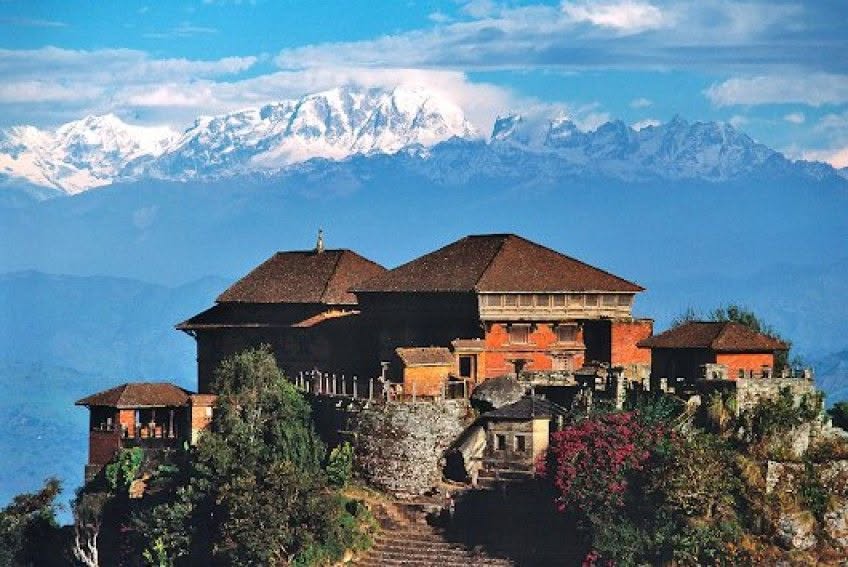
Travelers and history enthusiasts exploring Kathmandu Valley, Gorkha, or Kirtipur can still walk through the palaces, forts, and temples tied to this history. Share your thoughts or questions about Nepal’s unification in the comments, and keep exploring the layered history that shaped this Himalayan nation.
King Prithvi Narayan Shah, ruler of the Gorkha kingdom, unified Nepal through a military and diplomatic campaign lasting from 1743 until his death in 1775. He brought together dozens of small kingdoms, including the three Malla kingdoms of Kathmandu Valley, into a single state for the first time.
Prithvi Narayan Shah’s forces captured Kathmandu in 1768 and completed the conquest of Patan and Bhaktapur by 1769. The campaign followed years of blockades and smaller battles, including an earlier setback near Kirtipur before his forces adjusted their strategy.
The Divya Upadesh, or ‘Divine Counsel,’ is a collection of political and administrative teachings attributed to Prithvi Narayan Shah, compiled after his reign. It offers guidance on governance, diplomacy, and Nepal’s position between India and Tibet, famously calling the country a ‘yam between two boulders.’
Some Madhesi and janajati communities view his conquests as the start of centralized rule that limited their languages, land rights, and political voice. Episodes such as the harsh treatment reported toward Kirtipur’s residents after resistance are often cited as evidence that unification was not a purely peaceful process.
Yes, he is officially and popularly recognized in Nepal as the father of the nation for founding the territorial and political basis of the modern state. His birth anniversary is still marked with government ceremonies, though his legacy is increasingly discussed alongside modern debates on inclusion.
Before unification, the region consisted of dozens of small, independent kingdoms and principalities, generally estimated between 46 and 54, including the Malla kingdoms of Kathmandu Valley and clusters known as the Chaubisi and Baise Rajya. Each had separate rulers, armies, and trade policies, leaving the region politically fragmented.
Featured image: Photo by Pramod Tiwari on Pexels

Myths to Stop Repeating ❌ “Nepal has 10 UNESCO World Heritage Sites.” ✅ Nepal has 4 inscribed properties: Kathmandu […]
Nepal Travel Cost Per Day: A Real Budget Guide (2026) Travel & Tourism · Budget Guide 2026 Budget · […]
 Nepalfacts 07 minutes read 45 views
 Language and people 1 Nepal has a language related to no other language on Earth Kusunda is a genuine […]
Nepalfacts 10 minutes read 21 views Dal bhat nepal explained: what’s in the plate, why trekkers call it “power 24 hour,” regional variations, and the etiquette of eating it with your hands.