

airports nepal list
Airports in Nepal: The Complete Tourist Guide (2026 Updated) Nepal has 55 airports in total, but as a tourist, […]
 Nepalfacts 10 minutes read 21 views
 Ask any porter on the Annapurna trail what keeps them moving up a long staircase of stone steps, and many will grin and say “dal bhat power, 24 hour.” This simple bowl of lentils and rice is more than a meal in Nepal — it is part of daily life, a shared national habit, and a bit of trekking folklore about stamina. Understanding dal bhat nepal means understanding how Nepalis eat, work and travel.
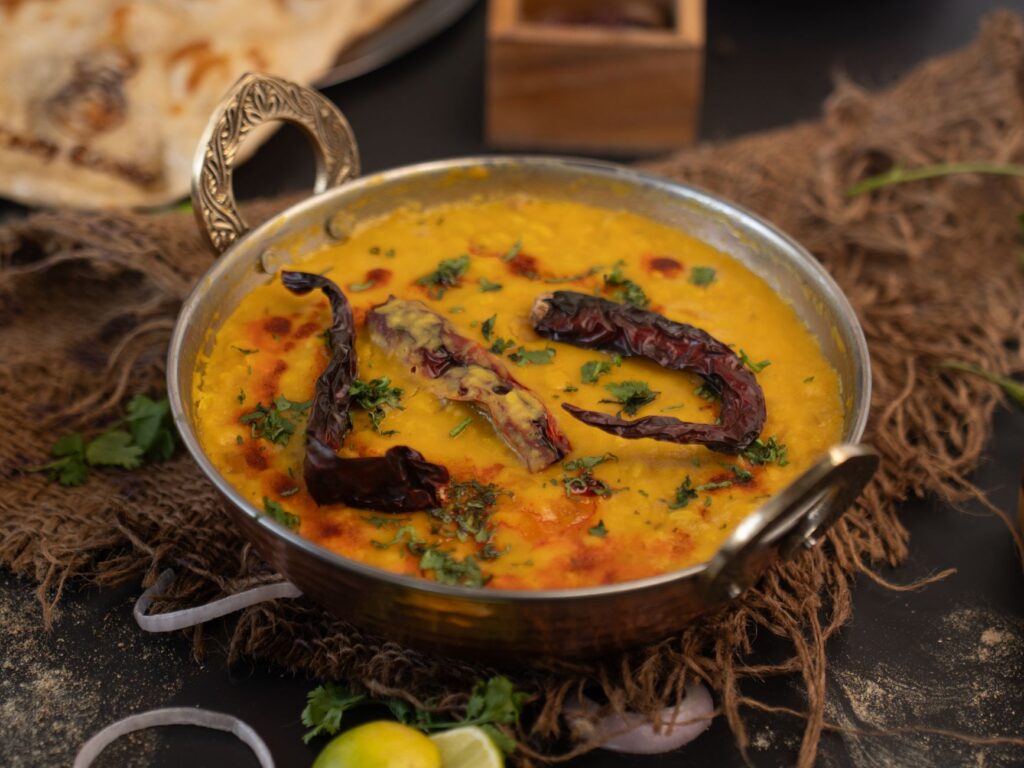
Dal bhat is a plate of cooked lentil soup (dal) served with steamed rice (bhat), usually accompanied by a vegetable curry called tarkari, a pickle called achar, and sometimes a green leafy side or meat curry. Most Nepalis eat it at least once, often twice, a day, and it is the default meal offered to guests, workers and trekkers alike.
Dal bhat is the everyday combination of lentil soup and rice that forms the core of most Nepali meals, typically plated with a vegetable curry, pickle, and sometimes greens or meat. It is less a single recipe than a format — a balanced plate that changes slightly with the season, the region, and the household cooking it.
A standard plate usually includes:
Nepalis prepare dal bhat with whatever is available locally, so no two households make it exactly the same way. That flexibility is part of why the dish has remained a daily staple for generations: it adapts to whatever a family or a guesthouse kitchen has on hand.
Dal bhat is widely considered Nepal’s national dish because it is eaten by most Nepalis, across many ethnic communities, regions and income levels, more often than any other meal. It is served at home, at festivals, in school canteens, and in roadside eateries known as bhojanalayas, though there is no official government decree naming it so.
Nepal is home to a large number of distinct ethnic and caste groups, each with its own food traditions, yet dal bhat is one of the few dishes that appears across most of them in some form. Newar, Tamang, Gurung, Tharu, Madhesi and Chhetri households all make a version of it, adapted to local ingredients and taste. That widespread, everyday presence is what earns dal bhat its informal title as the country’s national dish. For a broader sense of what else appears on Nepali tables, the roundup of traditional dishes you should try in Nepal covers dishes beyond the daily plate.
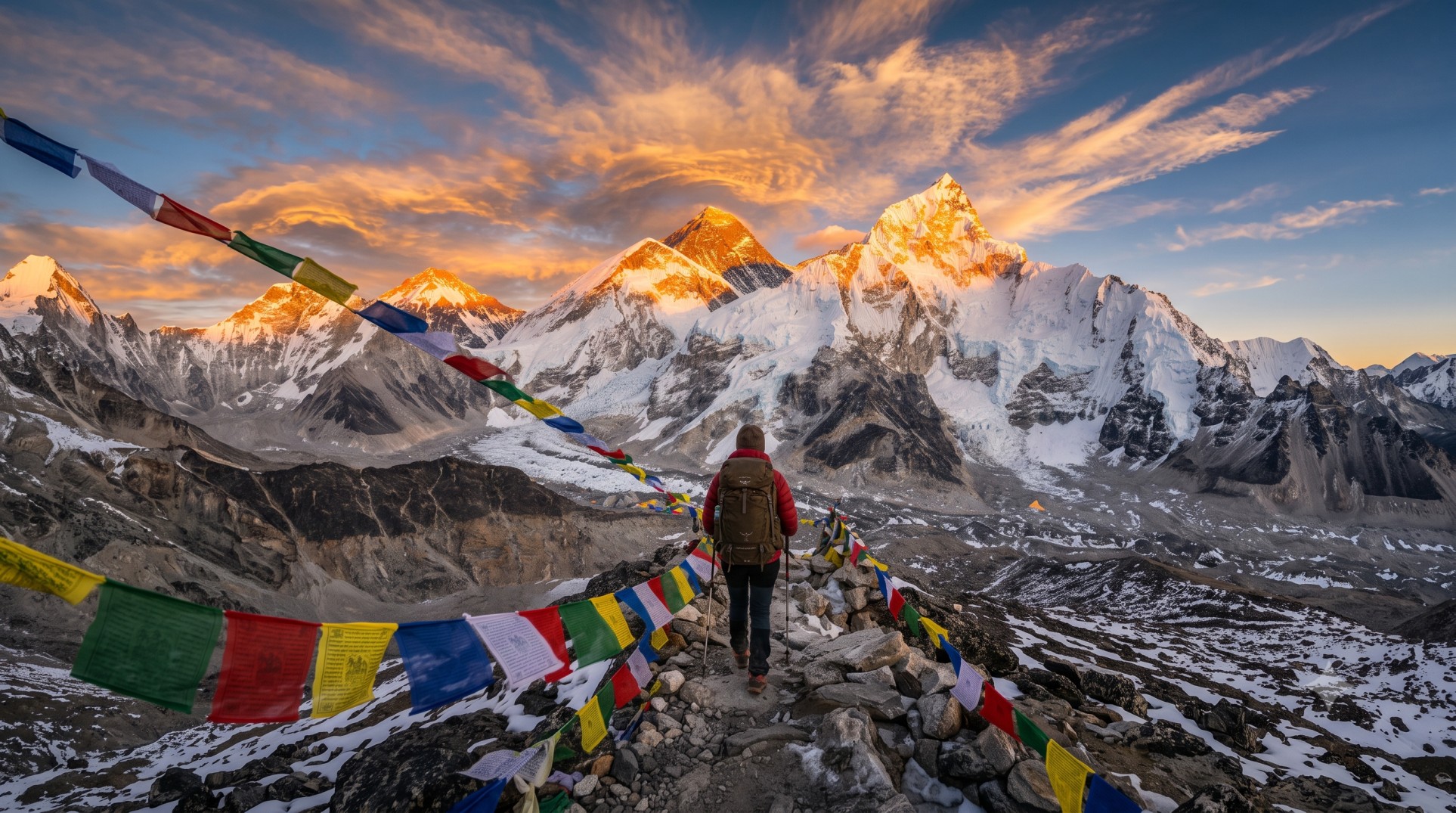
Trekking guides and porters in Nepal say “dal bhat power, 24 hour” as a half-joking way to describe the meal’s ability to sustain energy through a long day of walking or carrying loads on the trail. The phrase is popular on routes like Everest Base Camp and the Annapurna Circuit, where dal bhat is often the most reliable hot, filling meal available at teahouses along the way.
The saying has become a point of pride among porters and guides. Many eat dal bhat before setting off and again after a long day, because it is affordable, refillable, and generally easier on the stomach at altitude than fried or oily food. There is no scientific study behind the exact “24 hour” claim — it is trail folklore rather than a medical fact — but the underlying idea, that a filling, balanced, easily digestible meal supports hard physical work, is reasonable.
Trekkers planning routes such as the Everest Base Camp trail should also budget properly for meals along the way; the guide to Everest Base Camp trek cost breaks down what teahouse meals typically add to a trip. Anyone trekking at altitude should also pace themselves, stay hydrated, and pay attention to symptoms of altitude sickness such as headache, nausea or dizziness, and trek with a licensed guide and the correct permits where required, since no meal replaces proper acclimatization.
Lentils and rice together provide a more complete amino acid profile than either food eaten alone, because each contains amino acids the other lacks in significant amounts. Rice is relatively low in the amino acid lysine but supplies methionine, while lentils are a good source of lysine but lower in methionine — combined, the plate offers more balanced protein than one food alone.
This pairing is not unique to Nepal; grain-and-legume combinations appear in many food cultures worldwide, including rice and beans in Latin America and lentils with bread in parts of the Middle East. What stands out about dal bhat is how central this combination is to everyday Nepali nutrition, especially in households where meat is eaten only occasionally. Rice supplies quick carbohydrate energy, while lentils add protein and fiber that digest more slowly, a combination well suited to both farm labor and long trekking days.
Dal bhat changes noticeably depending on whether it is served in the hill regions, the Terai plains, or the high Himalayan districts, largely because of what grows locally and what is practical to cook at each altitude. These differences reflect Nepal’s dramatic range of geography within a relatively small country.
| Region | Typical Rice/Grain | Common Lentil | Notable Extras |
|---|---|---|---|
| Hills (e.g. Kathmandu Valley, Bagmati Province) | White or red rice | Masoor (red lentil) or mixed dal | Seasonal greens, gundruk (fermented leafy greens) |
| Terai (southern plains, Madhesh and Lumbini Provinces) | Fine white rice | Chana or arhar dal, often thinner | More spice, fish in some communities, mustard oil |
| Himalayan/mountain districts (e.g. Solukhumbu, Mustang) | Rice supplemented with millet, buckwheat, or potatoes | Simpler dal, sometimes replaced by potato curry | Butter tea, tsampa, dried meat where available |
In remote mountain districts like Solukhumbu (home to the Everest region) or Mustang in Gandaki Province, rice is often carried in by porters or mules, so households commonly supplement it with locally grown potatoes, buckwheat, or millet. In the Terai, bordering India, meals tend to lean spicier, and rice is often the finer, more polished variety grown in the plains.
Most Nepalis eat dal bhat with their right hand, mixing rice, dal and curry together before eating, and many teahouses and local eateries offer refills of rice, lentils and vegetables as part of the standard meal. Both customs carry real cultural meaning worth understanding before a trip.
Key etiquette points for visitors:
Sharing serving dishes is common at home, but once food is on an individual’s plate, it is considered personal and not returned to a communal bowl.
Dal bhat and Indian thali share obvious similarities — both center on rice or bread with lentils and vegetable sides — but dal bhat is generally simpler, features fewer dishes per plate, and functions as a daily staple rather than a special restaurant presentation. Thali, especially in restaurant settings, often includes multiple small bowls (katoris) with distinct curries, breads like roti or puri, and sometimes dessert, arranged for variety in a single sitting.
Dal bhat, by contrast, is usually built around one main vegetable curry and one dal, with more emphasis on quantity and refills than variety. Its regional character also differs from India’s thali traditions, since Nepal’s version adapts closely to hill, Terai or mountain ingredients. Both dishes reflect a shared South Asian culinary background, but dal bhat’s identity is tied specifically to Nepali daily life and to the country’s trekking culture.
A basic dal bhat can be made at home with lentils, rice, a few vegetables and common spices, and does not require special equipment beyond a rice cooker or pot. This is a simplified version for anyone wanting a taste of the dish before or after visiting Nepal.
This dish is naturally vegetarian and easily made vegan by using oil instead of ghee, which is one reason it works well for travelers with dietary restrictions.
Dal bhat is simple food doing a lot of work — feeding farmers, porters and city workers, connecting daily meals across many ethnic traditions, and fueling trekkers on some of the highest trails on earth. Trying it in a Kathmandu side street or a stone teahouse below the Himalayas is one of the most direct ways to understand everyday life in Nepal. Before planning a trip, it’s worth checking a realistic Nepal travel cost per day budget guide so meals like this fit naturally into the trip. Have you eaten dal bhat in Nepal, or tried making it at home? Share your experience or questions in the comments below.
Dal bhat is a Nepali meal of cooked lentil soup (dal) served with steamed rice (bhat), usually plated with a vegetable curry called tarkari, a pickle called achar, and sometimes greens or meat. It is eaten daily across Nepal and is the standard meal offered to guests, workers and trekkers.
Trekkers and porters use this phrase as trail folklore to describe how filling and sustaining the meal feels before a long day of walking or carrying loads. It is not a scientific claim, but dal bhat is genuinely a practical, affordable, easy-to-digest meal common at teahouses along popular routes.
Dal bhat and Indian thali are related but not the same. Dal bhat is generally simpler, built around one main curry and one dal eaten as a daily staple, while thali often includes several small dishes, breads and sometimes dessert, more common as a restaurant presentation.
Yes, dal bhat is naturally vegetarian in its base form of lentils, rice, vegetable curry and pickle. It can easily be made vegan by asking for oil instead of ghee and skipping any dairy-based sides like curd.
No, eating dal bhat with the right hand is the traditional and widely accepted way to eat it in Nepal. Visitors who are unfamiliar with eating by hand can ask for a spoon without concern, as most restaurants serving travelers are used to the request.
Refills of rice, dal and vegetable curry are commonly included at many teahouses and local eateries, but policies vary by establishment and additions like meat or eggs may cost extra. It is best to ask before assuming refills are free.
Featured image: Photo by Anil Sharma on Pexels

Airports in Nepal: The Complete Tourist Guide (2026 Updated) Nepal has 55 airports in total, but as a tourist, […]
Imagine you’re sitting at your desk in Sydney, desperately scrolling for a real escape from the daily grind. If […]
Nepalfacts 06 minutes read 203 views Standing at 5,364 meters beneath the world’s highest mountain is a dream shared by trekkers everywhere — and the […]
Nepalfacts 07 minutes read 45 views Language and people 1 Nepal has a language related to no other language on Earth Kusunda is a genuine […]