

6 Common Myths About Nepal
Myths to Stop Repeating ❌ “Nepal has 10 UNESCO World Heritage Sites.” ✅ Nepal has 4 inscribed properties: Kathmandu […]
 Nepalfacts 11 minutes read 43 views
Picture a walled courtyard in the heart of old Kathmandu, torchlit and crowded with armed nobles summoned in the middle of the night. By dawn, dozens of them lay dead, and Nepal’s political future belonged to one ambitious general. This is the story of the Kot Massacre, one of the bloodiest nights in Nepali court history, and the event that handed power to the Rana family for the next century.
The Kot Massacre Nepal remembers took place on the night of September 14, 1846, inside the Kot courtyard adjoining Kathmandu Durbar Square. A violent confrontation among rival courtiers, military commanders and palace officials left dozens of Nepal’s elite dead within hours, allowing an army commander named Jang Bahadur Rana to seize control of the government and found the hereditary Rana dynasty.
The Kot Massacre was a violent purge of Nepal’s aristocracy carried out in a single night in September 1846, when rival factions at the royal court clashed inside the Kot courtyard in Kathmandu. By morning, much of the kingdom’s senior military and civil leadership was dead, clearing the path for Jang Bahadur Rana to take control.
It was not a battle between Nepal and a foreign power. It was an internal power struggle among Nepali nobles, a queen and army commanders, fought over who would control the young king and the machinery of government. The scale of the killing, concentrated in one courtyard in one night, is what makes it stand out in Nepal’s history and gives it the alternate name Kot Parva 1846, using the Nepali word for a political tragedy.
The Kot Massacre grew out of years of factional rivalry inside the Kathmandu court rather than appearing without warning. Nepal in the 1840s was a kingdom still consolidating the territorial gains made decades earlier during the unification led by Prithvi Narayan Shah, but the throne itself had grown weak and contested.
King Rajendra Bikram Shah sat on the throne, yet real influence had shifted toward his wives, court favorites and a handful of powerful noble families competing for the office of Prime Minister and for command of the army. Among the most assertive figures was Queen Rajendralakshmi, a politically active royal consort who sought to control succession and sideline rivals who threatened her favored faction.
Several noble houses, including families linked to earlier Prime Ministers, competed constantly for royal favor. Sudden dismissals, exiles and occasional killings were already part of court life before 1846, so the palace operated in a near-permanent state of suspicion. Jang Bahadur Rana, then a rising military commander connected to the queen’s circle, watched this rivalry closely and was positioned to benefit from any crisis.
The immediate spark is still debated by historians. Most accounts agree that the killing of a court favorite, Gagan Singh, on the night of September 14, 1846, triggered the final crisis, though the exact circumstances of his death are not fully settled in the historical record. What is well established is that Queen Rajendralakshmi reacted with alarm and summoned the kingdom’s leading nobles and military officers to the Kot courtyard that same night, demanding an investigation.
On the night of September 14, 1846, dozens of Nepal’s most powerful nobles and army officers gathered at the queen’s command inside the Kot courtyard, and the meeting collapsed into open violence within hours. Accusations flew between rival factions, weapons were drawn, and in the chaos that followed, much of the kingdom’s senior leadership was killed.
Jang Bahadur Rana and his brothers, who commanded loyal troops stationed nearby, are widely described as having acted decisively once the violence began, which helped eliminate rival commanders who might have opposed them. Whether Queen Rajendralakshmi intended a limited purge of her enemies, or whether Jang Bahadur used the moment to remove every serious rival at once, is still debated, and no single surviving account fully settles the question.
Estimates of the dead vary across historical sources, generally ranging from roughly thirty to several dozen nobles, officers and officials killed that night, with more arrested or executed in the following days. Because record-keeping from the period was incomplete, and later accounts were often written by parties with their own interests, historians treat the precise death toll as approximate rather than confirmed.
What is not disputed is the outcome: by sunrise, Jang Bahadur Rana stood as the dominant military and political figure in Kathmandu, with no faction left strong enough to challenge him.
Jang Bahadur Rana was a Nepali army commander from the Kunwar family who used the Kot Massacre to make himself Prime Minister of Nepal and go on to found the Rana dynasty. He had built a reputation for ambition and discipline within the royal army before 1846, and his family ties placed him close to Queen Rajendralakshmi’s inner circle in the years leading up to the massacre.
In the aftermath, Jang Bahadur moved quickly. He had the queen exiled once she was no longer useful to him, secured the loyalty of the remaining troops, and had King Rajendra formally confirm him as Prime Minister and Commander-in-Chief. Before long, he arranged for the office of Prime Minister to become hereditary within his own family, adopting the surname “Rana” to mark this new status.
This combination of decisive action at home and diplomacy abroad let Jang Bahadur Rana build a position no single Nepali leader had held before: effective control of the government behind a nominally intact monarchy.
The weeks after the Kot Massacre saw Jang Bahadur Rana remove or neutralize every remaining center of opposition in Kathmandu. Queen Rajendralakshmi was exiled to India, several surviving nobles from rival families were executed or banished, and King Rajendra was eventually pushed aside in favor of his son, who ruled as a figurehead under Rana oversight.
The monarchy did not disappear, but it lost nearly all practical power. Shah kings continued to be crowned and to appear in ceremonies, yet real decisions on taxation, land, army command and foreign relations passed to the Rana Prime Minister and his family. This arrangement, an intact royal symbol with no royal authority, became the defining feature of Nepali governance for the next century.
The Kot Massacre mattered because it let Jang Bahadur Rana convert a single night of violence into a permanent, hereditary system of family rule. Rather than ruling as one strongman among rivals, he built a legal and dynastic structure that passed the Prime Minister’s office down through his descendants for about 104 years, from 1846 until 1951.
Under this Rana regime, Nepal was largely closed to the outside world. Foreign travel and diplomacy were tightly restricted, modern education was available mainly to Rana family members, and most of the population had little access to land reform, schooling or political representation. The family built grand palaces in Kathmandu, some still standing today, while much of the country remained agrarian and largely excluded from that wealth.
The table below summarizes how power shifted compared with the period before 1846.
| Feature | Before the Kot Massacre | After the Kot Massacre |
|---|---|---|
| Head of state | Shah king held real authority | Shah king reduced to a ceremonial figure |
| Prime Minister’s office | Appointed, often contested | Hereditary within the Rana family |
| Political power | Divided among competing noble houses | Centralized under one Rana Prime Minister |
| Foreign contact | Limited but growing | Tightly restricted for most citizens |
A common point of confusion for readers new to Nepali history is assuming Nepal had no king during Rana rule. In reality, the country had two parallel power structures: a royal one for ceremony, and a Rana one for actual governance, and this dual arrangement is exactly what the Kot Massacre made possible.
Rana rule in Nepal ended in 1951 after a political movement, supported by the exiled Nepali king and allied political parties, forced the Rana family to give up its hereditary hold on the Prime Minister’s office. King Tribhuvan returned from exile in India and worked with emerging political parties, including the Nepali Congress, to restore executive power to the monarchy and open the door to multi-party politics.
This 1951 settlement did not create full democracy overnight, and Nepal’s political structure kept evolving through later decades of palace rule, a multi-party period, a Maoist insurgency, and eventually the transition to the system described on Nepal’s federal democratic republic in the 21st century. Even so, 1951 is remembered as the moment the Rana dynasty’s century-long grip, born directly from the Kot Massacre, finally broke.
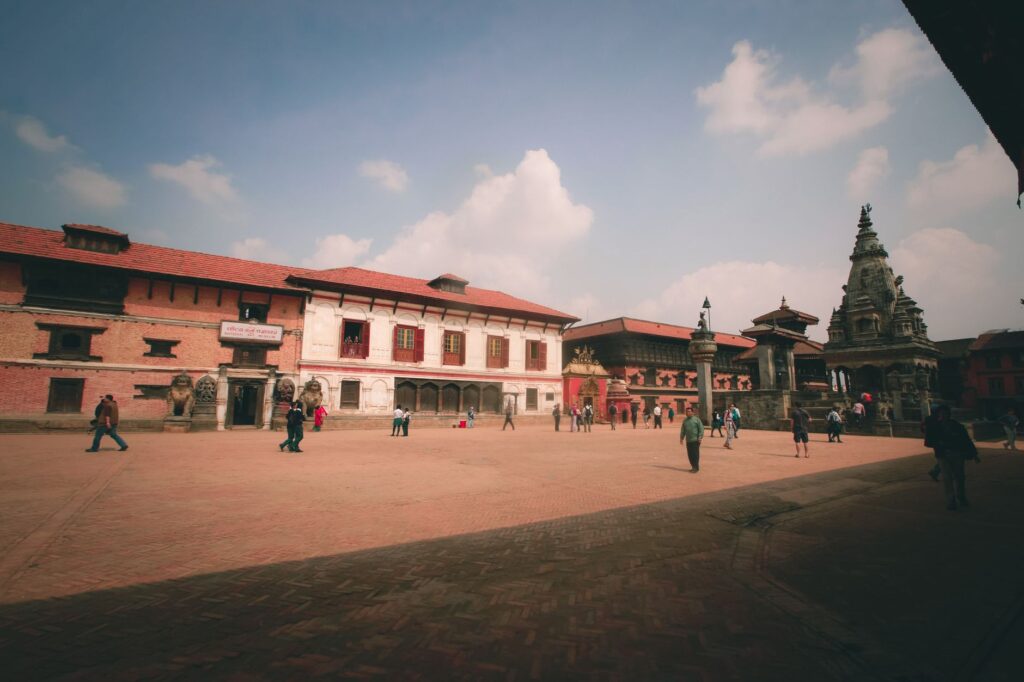
The Kot courtyard where the massacre unfolded still exists near Kathmandu Durbar Square, within the old royal palace complex in Kathmandu District, Bagmati Province. Visitors exploring the Durbar Square area today can see the general location with the help of a local guide, since the site blends into the surrounding historic palace buildings rather than standing out as a separate monument.
Kathmandu Durbar Square itself is a UNESCO World Heritage Site and remains one of the best places to understand how Nepal’s royal and political history layered over centuries, from the unification era to the Rana period and beyond. Travelers interested in this chapter often pair a visit here with a broader look at Nepali political history, including how the country managed to maintain its sovereignty, a story explored in this piece on why Nepal was never colonized.
Kathmandu Durbar Square sits at low elevation, so there is no trekking permit or altitude sickness risk to plan for here. If a visit is combined with trekking elsewhere in Nepal, travelers should still arrange proper permits through Nepal’s Department of National Parks and Wildlife Conservation, hire a licensed guide for restricted areas, and build in time to acclimatize, since altitude sickness can affect anyone gaining elevation quickly regardless of fitness level.
The Kot Massacre is a sobering reminder of how quickly one violent night can reshape a nation’s future, and walking through Kathmandu Durbar Square today offers a tangible link to that history. Nepal’s story since then, through Rana rule, the restoration of 1951, and today’s republic, rewards curious travelers willing to look past the postcard views. Share your own questions or experiences visiting these historic sites in the comments below.
The Kot Massacre was a violent purge of Nepal’s noble and military elite on the night of September 14, 1846, inside the Kot courtyard near Kathmandu Durbar Square. Rival court factions clashed after a court favorite’s killing, leaving dozens dead and allowing Jang Bahadur Rana to seize political control.
It grew out of years of rivalry among Nepali noble families, royal consorts and military commanders competing for influence over the throne. The killing of a court favorite, Gagan Singh, on the night of September 14, 1846, triggered a furious response from Queen Rajendralakshmi that ended in mass bloodshed.
Historical estimates vary, generally placing the death toll somewhere between roughly thirty and several dozen nobles, officers and officials killed that night, with more executed afterward. Records from the period are incomplete, so historians treat exact figures as approximate rather than confirmed.
Historians disagree on this point. Some view it as a spontaneous eruption of court tensions after an assassination, while others argue Jang Bahadur Rana and his allies used the chaos deliberately to eliminate rivals and seize power.
The Shah kings remained on the throne throughout the Rana period but held little real authority. Actual governance, including the army, taxation and foreign policy, was controlled by the hereditary Rana Prime Minister for about 104 years.
The Kot courtyard sits within the old royal palace complex adjoining Kathmandu Durbar Square, in Kathmandu District, Bagmati Province. Visitors can see the general area as part of a guided tour of this UNESCO World Heritage Site.
Featured image: Photo by Mehmet Turgut Kirkgoz on Pexels

Myths to Stop Repeating ❌ “Nepal has 10 UNESCO World Heritage Sites.” ✅ Nepal has 4 inscribed properties: Kathmandu […]
Nepalfacts 09 minutes read 22 views Discover weird laws in Nepal, from cow protection rules to temple etiquette, so you can travel respectfully and avoid awkward mistakes.
Facts of Nepal · Language How Many Languages Does Nepal Actually Speak? Hint: it’s a lot more […]
Nepalfacts 10 minutes read 92 views Key Takeaways Dashain is Nepal’s largest festival, a 15-day Hindu celebration marking the goddess Durga’s victory over the demon […]