How Many Languages Does Nepal Actually Speak?
Facts of Nepal · Language How Many Languages Does Nepal Actually Speak? Hint: it’s a lot more […]
 Nepalfacts 09 minutes read 32 views
Nepal looks completely different depending on the month you arrive. A traveler chasing clear views of Mount Everest wants a different window than someone booking a wildlife safari in Chitwan National Park or planning a Kathmandu Valley sightseeing trip. The best time to visit Nepal overall is autumn, from late September through November, because this is when rain clears out, skies stay mostly blue, and both trekking and sightseeing conditions line up well. That answer still shifts depending on your goals, so this guide breaks Nepal’s weather, crowds, and costs down month by month.
Nepal has four main seasons: autumn (September-November), winter (December-February), spring (March-May), and monsoon (June-August). Each one changes the country’s temperature, rainfall, and mountain visibility, since Nepal spans elevations from under 100 meters in the southern plains to 8,848.86 meters at the summit of Mount Everest, officially measured jointly by Nepal and China in 2020.
Because of this huge elevation range, Nepal weather by month is never one single thing. Kathmandu, sitting at roughly 1,400 meters in Bagmati Province, can feel pleasantly warm in a month when Everest Base Camp, at about 5,364 meters in Solukhumbu District, is freezing. Travelers should think in terms of season plus altitude plus region, not just the calendar month.
October and March are generally considered the two best months for the Nepal trekking season, with October usually edging out March for the clearest mountain views. Autumn trekking benefits from monsoon rains having just cleared dust and haze from the air, leaving sharp visibility of peaks like Everest, Annapurna, and the more remote Rara Lake in Mugu District.
Spring, particularly April, is a close second and adds blooming rhododendron forests along routes like the Annapurna Circuit. Trekkers often debate October versus March: October tends to bring steadier weather and clearer skies, while March offers thinner crowds and flowering trails but slightly more cloud buildup in the afternoons.
If you’re deciding when to visit Nepal for Everest Base Camp specifically, read a dedicated Everest Base Camp trek cost guide before booking, since permit and logistics costs shift with season and demand.
Altitude sickness can affect trekkers regardless of season, fitness level, or previous trekking experience, especially above 3,000 meters. Ascend gradually, stay hydrated, build in acclimatization days, and trek with a licensed guide where required. Permits such as the TIMS card and national park entry fees are mandatory on most routes – check current rules and costs with the Nepal Tourism Board or the Department of National Parks and Wildlife Conservation before departure.
The best time for a Chitwan or Bardia wildlife safari is the dry season from October to March, when grass is shorter and animals gather near rivers, making sightings of rhinos, tigers, and birdlife easier. Chitwan National Park, in the Terai lowlands of Bagmati Province, and Bardia National Park, further west in Lumbini Province, both see thick elephant grass during and after monsoon, which hides wildlife from view.
Spring, especially March, also works well since temperatures are warm but not yet at their summer peak. Summer months (April-June) turn hot and humid in the lowlands, and monsoon season makes some park roads impassable. For a full breakdown of what to pack and expect, see this Chitwan National Park safari guide.
Nepal’s monsoon season, roughly June through August, is not worth avoiding entirely, but it does rule out most classic trekking and safari plans. Heavy rainfall, leeches on lower-elevation trails, landslide risk on mountain roads, and poor mountain visibility make this the toughest window for typical tourism, which is why some call it the worst time to visit Nepal for trekking.
Monsoon is not uniform across the country, though. The trans-Himalayan regions of Upper Mustang and Dolpo, both in rain-shadow areas, stay relatively dry because the main Himalayan range blocks most of the monsoon moisture. These districts remain popular with trekkers seeking a summer trekking option away from the rain.
Monsoon is also one of the cheaper and least crowded times to see Kathmandu and Pokhara if you’re comfortable with rain showers, since hotel rates and flight prices typically drop and major sights see far fewer visitors.
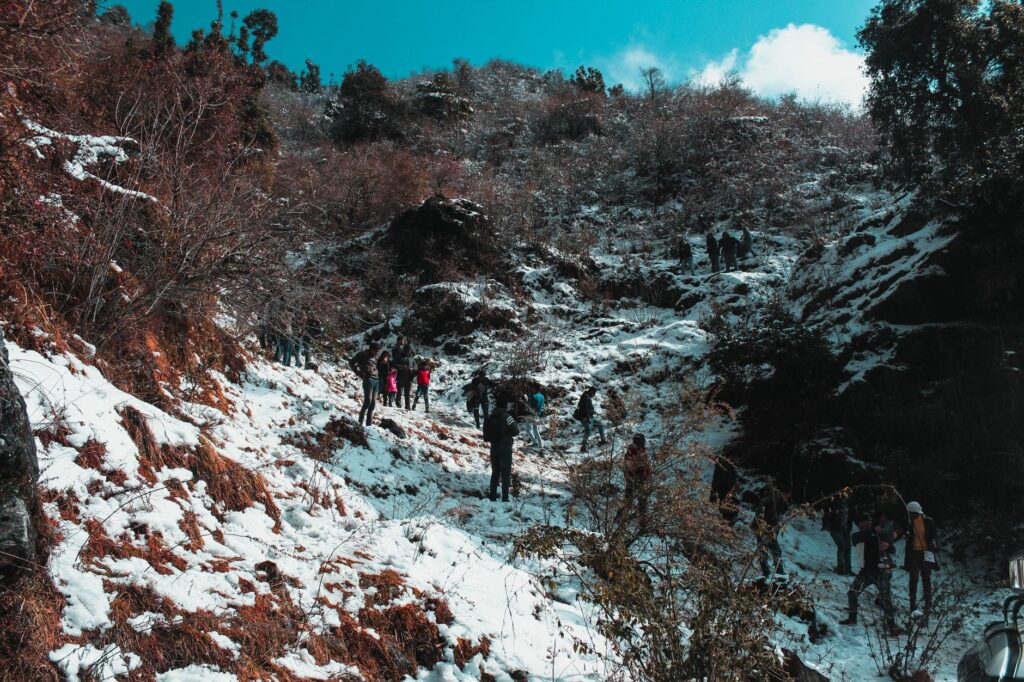
Winter visits to Nepal work well for Kathmandu Valley sightseeing, Pokhara, and lowland destinations like Chitwan, but high-altitude trekking routes above roughly 4,000 meters can close or become dangerous due to snow. December is typically mild in the valleys, while January is usually the coldest month in Nepal, with freezing nights common at higher elevations and occasional frost even in Kathmandu.
Lower treks such as Ghorepani-Poon Hill in the Annapurna region or short Chitwan jungle walks remain enjoyable in winter, with clear skies and few crowds. High passes like Thorong La on the Annapurna Circuit or routes toward Everest Base Camp become far more demanding in winter, requiring proper cold-weather gear, experience, and a licensed guide.
Winter suits budget-conscious sightseeing travelers who aren’t aiming for high mountain passes, and it pairs well with quieter crowds at heritage sites like Bhaktapur Durbar Square and Swayambhunath.
The biggest Nepali festivals, Dashain and Tihar, usually fall in September or October and offer some of the richest cultural experiences in the country, though exact dates shift each year because they follow the lunar calendar. Dashain is Nepal’s longest and most important Hindu festival, marked by family gatherings, kite flying, and the tika blessing, while Tihar, the festival of lights, follows a few weeks later with decorated homes and the worship of animals including crows, dogs, and cows.
Because these festivals fall right at the start of the autumn high season, travelers get good weather alongside cultural celebrations, though hotels and domestic flights book up quickly. Always check a current lunar calendar close to your travel dates rather than assuming fixed months.
Flights and hotels in Nepal are generally cheapest during the monsoon months of June through August and during parts of the off-peak winter window in January. Airlines and hotels in Kathmandu, Pokhara, and Chitwan often lower rates to attract visitors when demand drops, making this period the cheapest time to visit Nepal for travelers prioritizing budget over guaranteed clear weather.
Peak season pricing hits hardest in October-November and again in March-April, when domestic flights to Lukla for Everest treks and hotel rooms in Thamel, Kathmandu’s main tourist district, can sell out well in advance. Note that exact prices for flights, permits, and accommodation change often, so confirm current rates with airlines, hotels, or the Nepal Tourism Board before you book. Travelers wanting to estimate total trip costs across seasons should check this Nepal travel cost per day budget guide for a realistic daily spending range.
Here is a general snapshot of typical Kathmandu Valley conditions by month, though mountain and lowland regions vary significantly from these figures and from year to year.
| Month | Season | Typical Temp (Kathmandu) | Rainfall | Crowd Level |
|---|---|---|---|---|
| January | Winter | 2-18°C | Low | Low |
| February | Winter | 4-20°C | Low | Low |
| March | Spring | 9-24°C | Low-Moderate | Moderate-High |
| April | Spring | 12-27°C | Moderate | High |
| May | Spring | 16-29°C | Moderate | Moderate |
| June | Monsoon | 19-29°C | High | Low |
| July | Monsoon | 20-28°C | Very High | Low |
| August | Monsoon | 19-28°C | Very High | Low |
| September | Autumn | 16-27°C | Moderate | Moderate-High |
| October | Autumn | 11-24°C | Low | Peak |
| November | Autumn | 6-21°C | Low | Peak |
| December | Winter | 2-18°C | Low | Low-Moderate |
A common misconception is that cooler temperatures guarantee clearer mountain views year-round. In reality, winter haze and pollution can reduce visibility in Kathmandu even on cold, clear-feeling days, while autumn mornings after monsoon tend to offer the sharpest, dust-free views of the Himalayas.
Choosing the best time to visit Nepal comes down to matching the season to what you want to do. Trekkers chasing clear Everest or Annapurna views should aim for October-November or March-April. Wildlife enthusiasts headed to Chitwan or Bardia should target the dry months from October through March. Festival travelers should plan around Dashain and Tihar in autumn, while budget travelers comfortable with rain can save by visiting during monsoon.
Nepal rewards flexible planning more than any single “perfect month.” Pick your priority – mountains, wildlife, culture, or cost – and let that choice guide your calendar. Explore more of what each region and season has to offer, and feel free to share your own Nepal travel questions or experiences in the comments below.
October is widely considered the best month to visit Nepal because it combines clear skies, comfortable temperatures, low rainfall, and strong mountain visibility, making it ideal for trekking, sightseeing, and wildlife viewing at the same time.
Nepal’s monsoon season runs roughly from June to August and brings heavy rain plus reduced mountain visibility. Most trekkers should avoid it for high-altitude routes, though rain-shadow areas like Upper Mustang stay drier and remain trekkable during these months.
October generally offers clearer skies and more stable weather for trekking, while March brings thinner crowds and blooming rhododendrons but slightly more afternoon cloud cover. Both are strong choices, so the decision often comes down to crowd tolerance versus a higher chance of clear views.
January is typically the coldest month in Nepal, with freezing nighttime temperatures common at higher elevations and occasional frost even in lower valleys like Kathmandu. High mountain regions get significantly colder and see heavy snowfall.
Yes, winter works well for Kathmandu, Pokhara, and Chitwan sightseeing, with mild days and few crowds. High-altitude treks above about 4,000 meters can close due to snow, so winter suits lower-elevation travel plans better than high mountain passes.
The cheapest time to visit Nepal is generally during the monsoon months of June to August, when flights and hotel rates tend to drop due to lower demand. Parts of January also offer discounted off-peak pricing in Kathmandu and Pokhara.
Featured image: Photo by Shubh Lingwal on Pexels

Facts of Nepal · Language How Many Languages Does Nepal Actually Speak? Hint: it’s a lot more […]
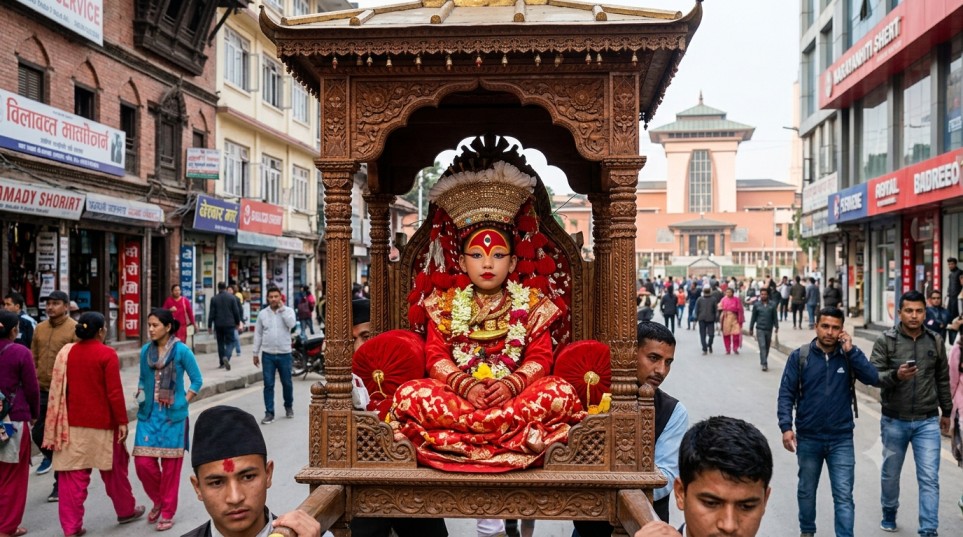
How Nepal Chooses a Living Goddess The five stages of selecting the Royal Kumari of Kathmandu […]
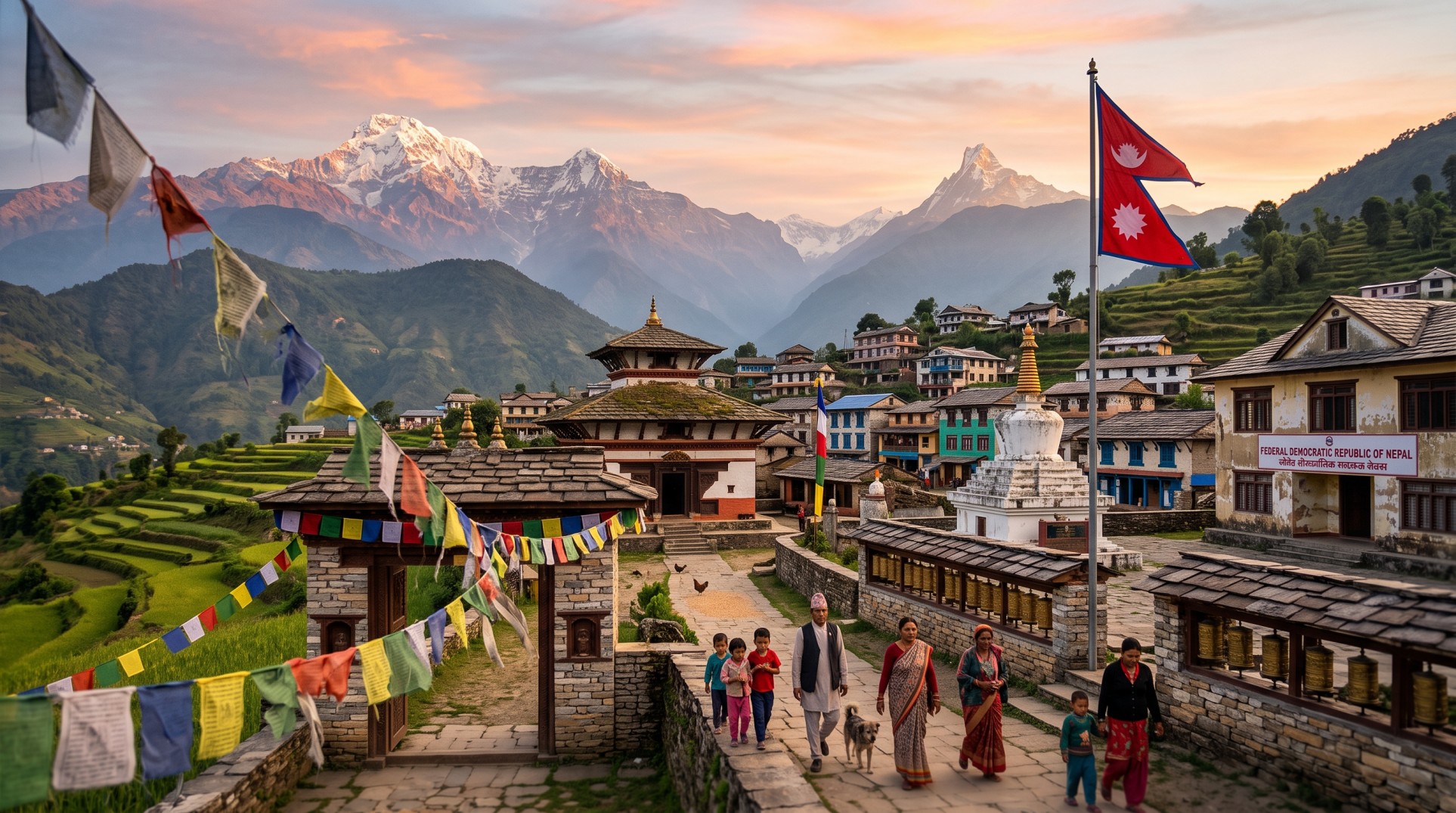
Federal Democratic Republic of Nepal: Facts, History & Government (2026) Nepal Facts · Updated 2026 Federal Democratic Republic of […]
Nepal Travel Cost Per Day: A Real Budget Guide (2026) Travel & Tourism · Budget Guide 2026 Budget · […]