Comments Off on Gurung People Traditions: Culture, Dress and Life in Nepal
Key Takeaways:
Tamu Lhosar, the Gurung New Year, usually falls in December and marks one of the community’s most important cultural celebrations.
The Gurung, who call themselves Tamu, are an Indigenous Tibeto-Burman ethnic group native to the Annapurna hills of Gandaki Province.
Gurung religion blends animism, the pre-Buddhist Bon tradition and Tibetan Buddhism, with many families also honoring Hindu customs.
Gurung and Magar men have served as Gurkha soldiers since recruitment ties with Britain began after the Anglo-Nepalese War of 1814-1816.
Ghandruk and Sikles, both in Kaski district, are the most accessible Gurung villages for travelers on the Annapurna trekking routes.
The Gurung language, Tamu Kyui, is considered at risk of decline as younger generations shift toward Nepali and English.
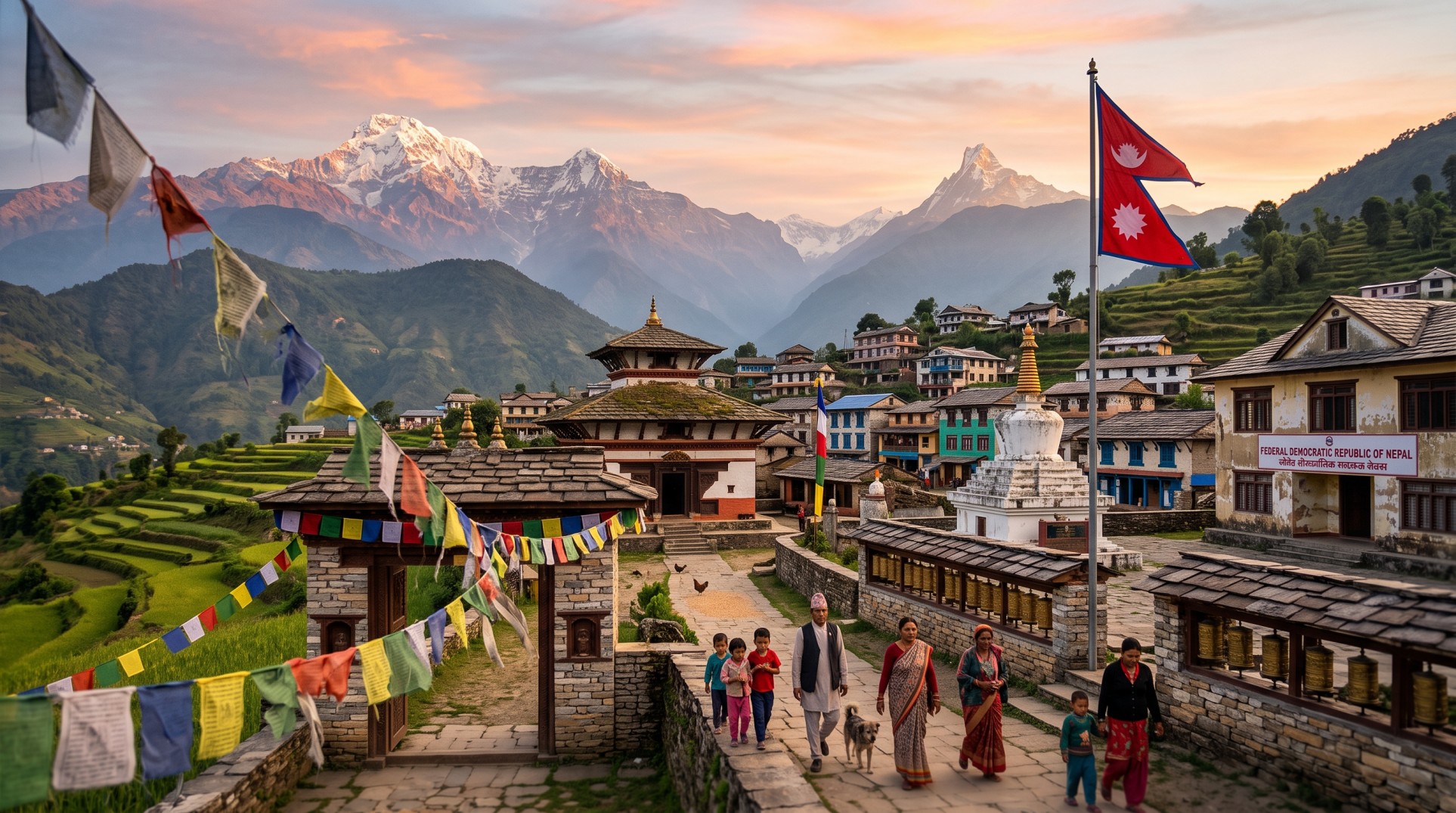
Walk the stone-paved trails toward Annapurna Base Camp and you will likely pass through villages where prayer flags flutter beside small shrines, and where elders still speak a language unrelated to Nepali. These are Gurung villages, and the people who built them have shaped Nepal’s history far beyond the mountains they call home. Understanding Gurung people traditions means looking at a community that has blended animism, Buddhism and global military service into a distinct and resilient way of life.
The Gurung, who call themselves Tamu, are an Indigenous ethnic group native to the middle hills of the Annapurna region in Gandaki Province. Their traditions include a distinctive dress style, the communal courtship house known as Rodhi Ghar, a religious blend of animism, Bon and Tibetan Buddhism, and a globally recognized legacy as Gurkha soldiers. Today, Gurung communities balance these customs with trekking tourism, education and migration for work.
Who Are the Gurung People? Origins and Homeland in the Annapurna Hills
The Gurung people are an Indigenous Tibeto-Burman ethnic group whose traditional homeland lies in the hills and mountains around the Annapurna massif in Gandaki Province, central Nepal. They refer to themselves as Tamu, and “Gurung” is the name more commonly used in Nepali and English.
Most anthropologists and the Gurung themselves trace the community’s ancestry to migrations from the Tibetan Plateau, though the exact timeline remains uncertain and is debated among scholars. Over generations, the community settled into terraced hill villages, raising livestock, farming barley, millet and potatoes, and later building strong ties to the Nepali and British armies.
Major Gurung settlements include Ghandruk, Sikles, Kaski, Lamjung and parts of Manang and Tanahun districts. Nepal’s national census counts the Gurung as one of the country’s significant hill ethnic groups, alongside the Magar, Tamang and Rai, though exact population figures vary between census rounds and readers should check the Central Bureau of Statistics for current numbers.
What Does Traditional Gurung Dress Look Like?
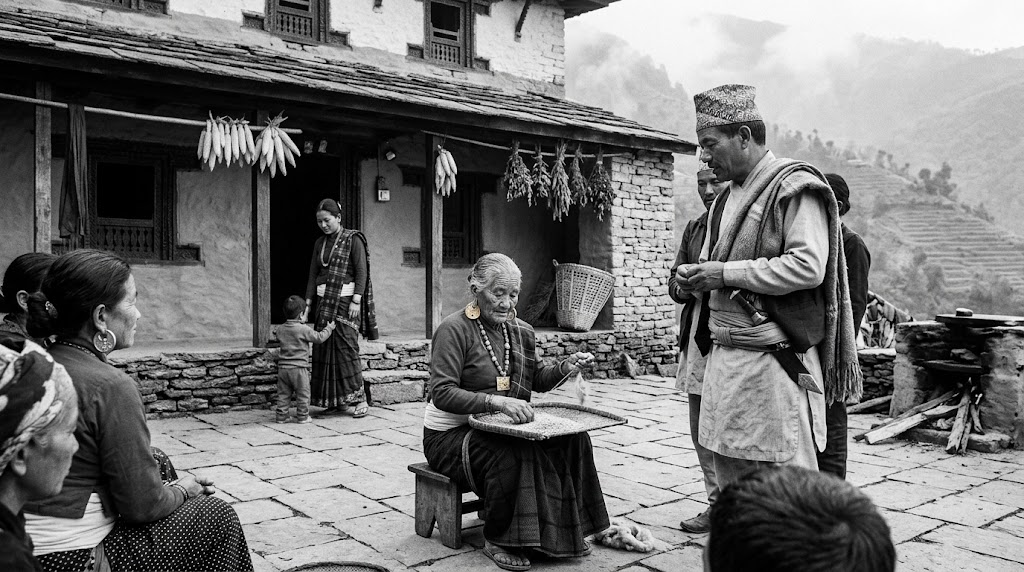
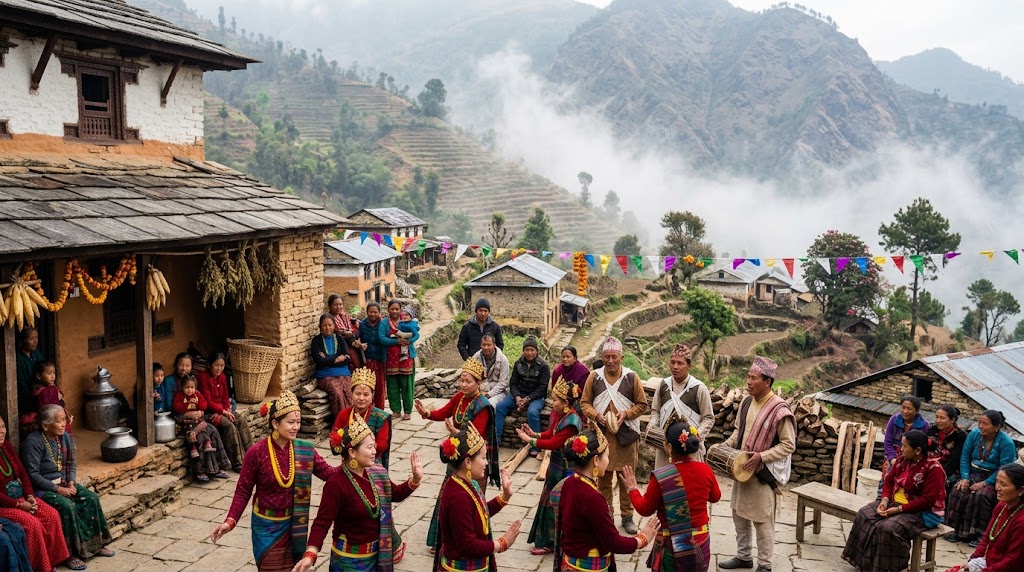
Traditional Gurung dress for women centers on the ghalek, a wraparound blouse paired with a long pleated skirt called a fariya, often finished with a woven cotton or wool shawl. Men traditionally wore a knee-length tunic with a cloth belt and, for formal occasions, a Gurkha-style cap or topi.
Jewelry plays an important role, especially heavy gold nose rings called phuli and ear ornaments that signal status and marital history within the community. Older women in villages like Ghandruk still wear these pieces daily, while younger generations tend to save traditional dress for festivals, weddings and Tamu Lhosar celebrations.
Most Gurung people today wear modern clothing for everyday life, especially in towns and while working in tourism. Travelers should not expect to see full traditional dress on an ordinary trekking day, but it remains common during cultural events and can be seen in community museums such as the one in Ghandruk.
Rodhi Ghar: The Gurung Tradition of Communal Courtship and Song
Rodhi Ghar was a communal house where unmarried young Gurung men and women gathered in the evenings to sing, exchange riddles, spin wool and get to know potential marriage partners under the supervision of an elder. The tradition served as both entertainment and a structured, socially approved way to build relationships before marriage.
Each rodhi group typically had its own name and a set of call-and-response folk songs passed down orally. Young people would take turns reciting verses, often improvising clever replies, while elders ensured the gathering stayed respectful.
The practice has declined sharply with modern schooling, mobile phones and migration for work, and genuine working Rodhi Ghar houses are now rare. Some villages, including Ghandruk, have revived the tradition in a cultural-tourism format, where visitors can watch a performance that recreates the courtship songs and dances for educational purposes rather than as an actual matchmaking event.
Gurung Religion: A Blend of Animism, Bon and Buddhism
Gurung religion is best described as a layered blend of animist nature worship, the pre-Buddhist Bon tradition of the Himalayas, and Tibetan Buddhism, with Hindu influence visible in many villages as well. Rather than choosing one faith, many Gurung families practice elements of all three depending on the occasion.
Shamanic priests known as pachyu and klehbri perform rituals rooted in Bon and animist belief, particularly around death ceremonies, healing and appeasing local spirits tied to mountains, forests and rivers. Buddhist lamas are also called upon for funeral rites and monastery ceremonies, especially in villages closer to the high Himalayas such as Manang.
So are Gurung people Buddhist or Hindu? Many Gurung identify as Buddhist on census forms, but the lived religious practice is genuinely syncretic, weaving animist spirit worship, Bon ritual and Buddhist philosophy together rather than keeping them separate. This blend is one of the most distinctive features of Gurung culture Nepal-wide, and it sets the community apart from both the Hindu-majority Newar traditions of the Kathmandu Valley and the more uniformly Buddhist practices of Sherpa communities in the Everest region. Readers interested in comparing religious practice across Nepal’s ethnic groups can see this contrast in our piece on Newar people traditions in Kathmandu and our guide to Sherpa people traditions.
Why Are Gurung Men Famous as Gurkha Soldiers?
Gurung and Magar men make up a large share of Gurkha soldiers because of a military recruitment relationship with Britain that began after the Anglo-Nepalese War of 1814-1816 and continues today through the British Army, Indian Army and Nepal’s own security forces. The hill districts around Annapurna, including Gurung heartlands like Lamjung and Kaski, became traditional recruiting grounds.
Gurkha soldiers earned a global reputation for bravery, discipline and endurance through service in both World Wars and numerous later conflicts, and several Gurkha soldiers have been awarded the Victoria Cross, the British Commonwealth’s highest award for battlefield valor. Successful recruits send remittances home, and many families in villages like Ghandruk have at least one member who has served or is currently serving.
Gurkha service has shaped Gurung village life in visible ways: pension income has helped fund schools and lodges, English language skills spread through the community, and some retired soldiers now run trekking guesthouses. The legacy is a source of pride, though it also means many villages have a disproportionate number of young men working abroad, leaving farming and household duties more often to women and elders.
Tamu Lhosar: How the Gurung New Year Is Celebrated
Tamu Lhosar is the Gurung New Year festival, usually celebrated in mid-to-late December according to the lunar calendar used by the Tamu community, marking the start of a new year in their traditional counting system. Celebrations include traditional dance, music, feasting and processions where people wear traditional dress and perform folk songs once associated with Rodhi gatherings.
In Kathmandu and Pokhara, Tamu Lhosar has grown into a large public festival with parades organized by Gurung community organizations, drawing Gurung people back from abroad and introducing the holiday to wider Nepali society. In home villages such as Ghandruk and Sikles, celebrations tend to be smaller and more family-centered, often including offerings to household and nature spirits.
Because the date follows a lunar calendar, it shifts slightly each year, so travelers hoping to witness Tamu Lhosar should check current-year dates through local tourism offices or community sources before planning a trip around it.
Gurung Language and the Fight to Keep It Alive
The Gurung language, also called Tamu Kyui, belongs to the Tibeto-Burman language family and is distinct from Nepali, with its own vocabulary, tones and traditionally oral storytelling culture. Linguists and Nepali language researchers list it among the country’s many indigenous languages facing declining daily use, particularly among younger generations raised in Nepali-medium schools or living abroad.
Efforts to preserve Tamu Kyui include community-run language classes, Gurung cultural organizations publishing materials, and renewed interest tied to Tamu Lhosar celebrations and ethnic pride movements. Older generations in remote villages like Sikles still use the language daily, while many younger Gurung speak Nepali or English as their primary language, especially those who grew up in cities or abroad.
Tourism has had an interesting side effect here: guides and lodge owners in Ghandruk often make a point of teaching basic Gurung greetings to interested trekkers, which has become a small but meaningful way of keeping the language visible.
Visiting a Gurung Village: Ghandruk, Sikles and the Annapurna Trail
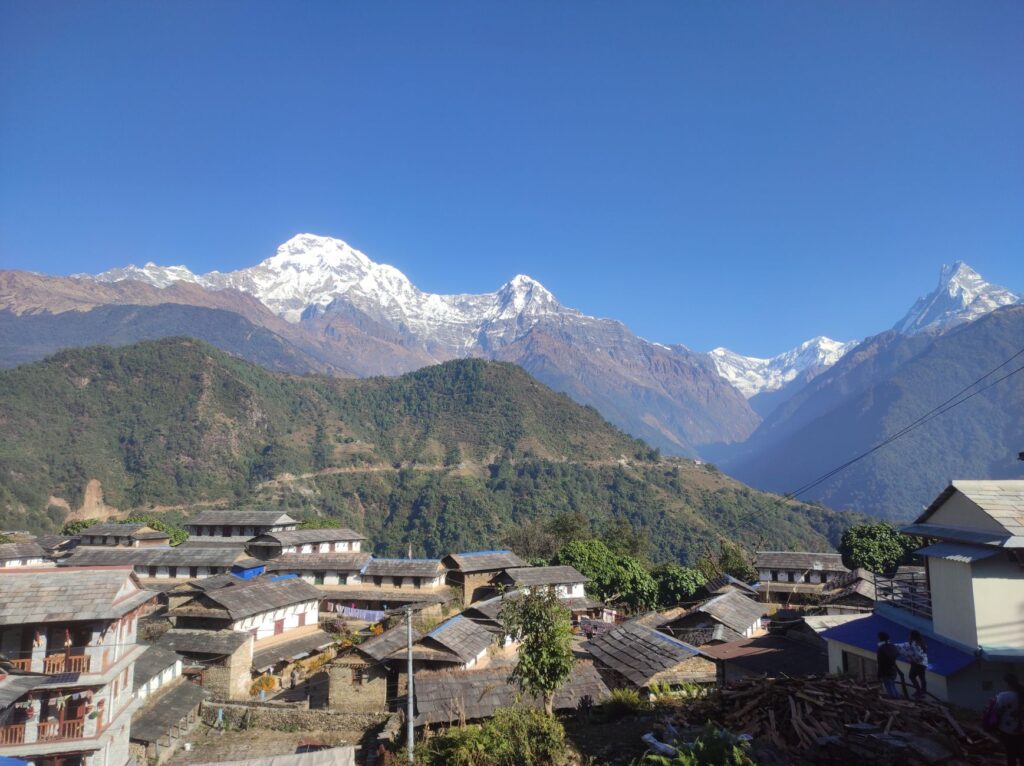
Ghandruk and Sikles are the two most accessible Gurung villages for travelers, both reached on foot through the Annapurna Conservation Area in Kaski district, and both offer homestays, teahouses and close-up views of the Annapurna and Machhapuchhre peaks. Ghandruk sits on the popular Annapurna Base Camp and Poon Hill trekking routes, while Sikles is quieter and known for its well-preserved slate-roofed houses.
Travelers passing through should keep a few practical points in mind:
Entry requires a valid Annapurna Conservation Area Project permit and, for most routes, a TIMS card; rules and fees change, so check current requirements with the Nepal Tourism Board or Department of National Parks and Wildlife Conservation before departure.
A licensed guide is strongly recommended, both to support the local economy and for safety on mountain trails.
Altitude sickness is a real risk even on moderate Annapurna routes; ascend gradually, stay hydrated, and know the warning signs of headache, nausea and dizziness that mean you should stop ascending and seek advice.
Visit the Gurung Museum in Ghandruk to see traditional dress, tools and photographs documenting Gurkha history and village life.
Dress modestly and ask before photographing people, ceremonies or private homes.
Comparing Gurung villages with other cultural stops is useful when planning a broader itinerary, something covered in our roundup of the 10 best places to visit in Nepal. Many visitors combine a Gurung village stay with wildlife spotting, mountain views and a homestay meal of dhido, a traditional buckwheat or millet porridge that remains a staple in hill communities.
Village
District
Highlights
Ghandruk
Kaski
Gurung Museum, Annapurna views, easiest access
Sikles
Kaski
Traditional architecture, quieter trails
Manang villages
Manang
Stronger Buddhist influence, high-altitude culture
Exploring Gurung Culture for Yourself
Gurung people traditions bring together ancient spirit worship, Buddhist philosophy, distinctive dress, courtship songs and a soldiering legacy recognized around the world, all shaped by life in the Annapurna foothills. Spending even a night in a village like Ghandruk or Sikles offers a direct window into this layered culture that no museum can fully capture.
Nepal’s hill communities each carry their own story of resilience and hospitality, and the Gurung story is one of the most distinctive threads in that larger picture. If you have trekked through a Gurung village, met a Gurkha veteran, or have questions about planning your own visit, share your experience or ask in the comments below.
Frequently Asked Questions
Are Gurung people Hindu or Buddhist?
Many Gurung people identify as Buddhist on official records, but their everyday religious practice blends animist nature worship, the pre-Buddhist Bon tradition and Tibetan Buddhism, with some Hindu influence. This mix of beliefs, rather than a single fixed religion, is one of the most distinctive features of Gurung culture.
What language do Gurung people speak?
Gurung people traditionally speak Tamu Kyui, a Tibeto-Burman language unrelated to Nepali. It remains strongest among older generations in remote villages like Sikles, while many younger Gurung now use Nepali or English as their primary language, prompting community efforts to keep Tamu Kyui alive.
Why are Gurung men associated with Gurkha soldiers?
Gurung men, along with Magar men, became a major recruiting base for Gurkha regiments after a military relationship with Britain began following the Anglo-Nepalese War of 1814-1816. That legacy continues today through the British Army, Indian Army and Nepal’s own security forces.
When is Tamu Lhosar celebrated?
Tamu Lhosar, the Gurung New Year, is usually celebrated in mid-to-late December, though the exact date shifts each year because it follows a lunar calendar. Travelers hoping to see the festival should confirm the current year’s date through local tourism offices before planning a visit.
Which Gurung villages are best to visit near Annapurna?
Ghandruk and Sikles, both in Kaski district, are the most accessible Gurung villages for travelers, offering homestays, teahouses and mountain views along Annapurna trekking routes. Ghandruk has easier access and a cultural museum, while Sikles is quieter with well-preserved traditional houses.
What is Rodhi Ghar?
Rodhi Ghar was a traditional communal house where unmarried young Gurung men and women gathered to sing, exchange riddles and build relationships under an elder’s supervision. The custom has largely disappeared from daily life but survives in cultural performances in villages like Ghandruk.


 Nepalfacts 09 minutes read 31 views