

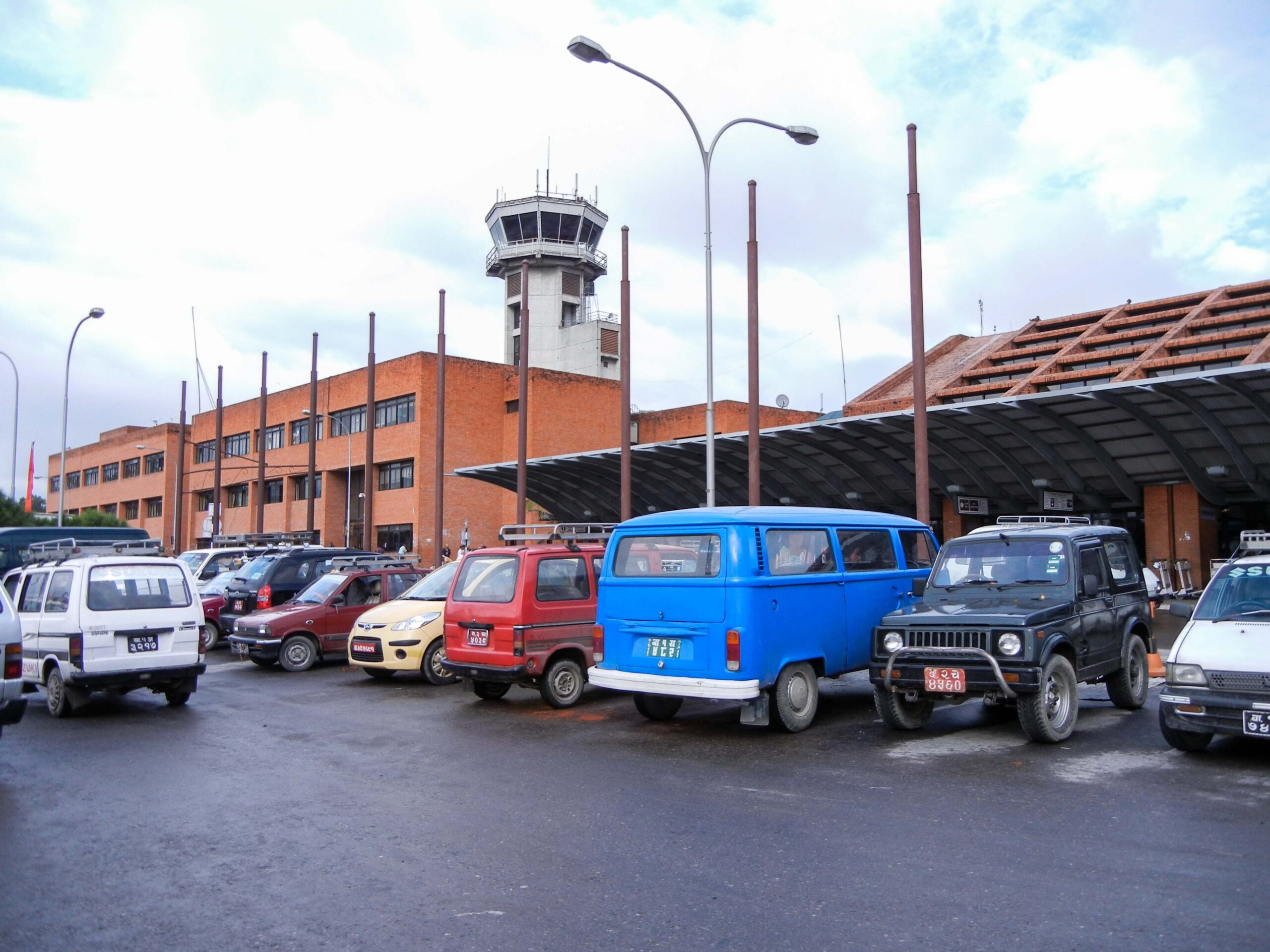
airports nepal list
Airports in Nepal: The Complete Tourist Guide (2026 Updated) Nepal has 55 airports in total, but as a tourist, […]
 Nepalfacts 10 minutes read 27 views
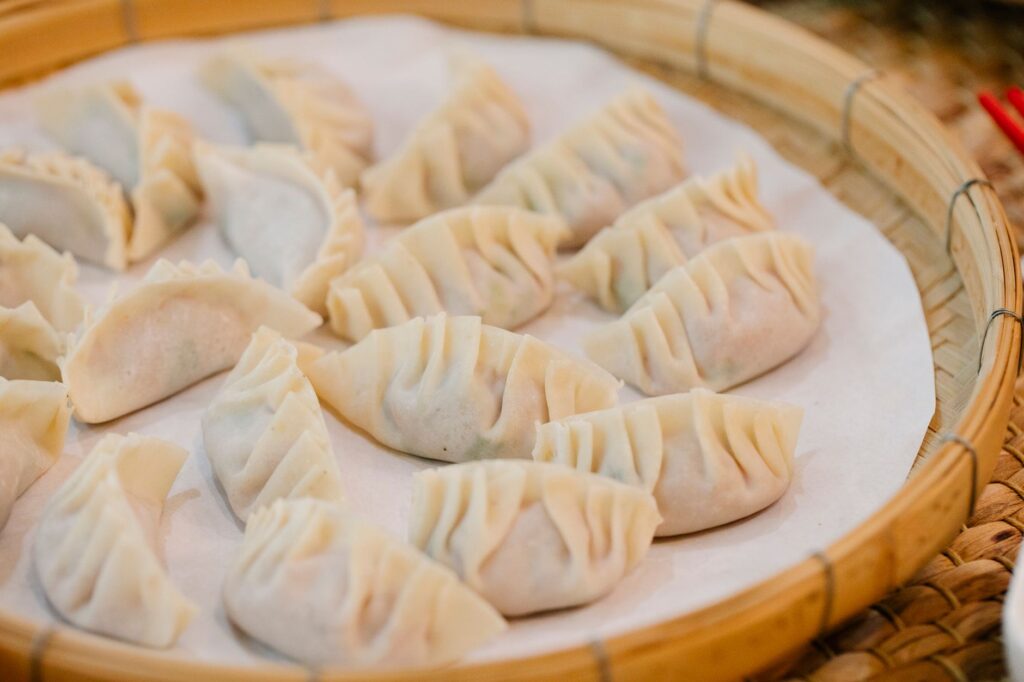
Walk through any street in Kathmandu after dark and you will smell it before you see it: steam curling off bamboo baskets, a whiff of garlic and timur pepper, and a queue of people waiting for a plate of small folded dumplings. That dumpling is momo, and in Nepal it is less a snack than a daily ritual. Momo is a steamed, fried, or pan-fried dumpling filled with minced meat or vegetables, wrapped in a thin flour dough, and served with a spicy tomato-based dipping sauce called achar. It arrived in Nepal through Himalayan trade routes from Tibet, was adopted and reshaped by Newar cooks in the Kathmandu Valley, and today it is widely regarded as one of the country’s best-loved dishes, rivaling even dal bhat in everyday conversation.
Momo is a small dumpling made by wrapping a filling of minced meat or vegetables in a thin wheat-flour wrapper, then cooking it by steaming, frying, or simmering in broth. It is usually eaten with the hands or a spoon, dipped in a tangy, chili-forward sauce, and served in sets of roughly ten pieces per plate.
The word “momo” likely traces back to the Tibetan term for steamed bread, which traveled along trade routes into Tibet and then south across the Himalayas into Nepal. In form, momo resembles the Chinese jiaozi and the Mongolian buuz, but Nepali momo has developed its own identity through local spices, fillings, and sauces not typically found in Lhasa or Beijing.
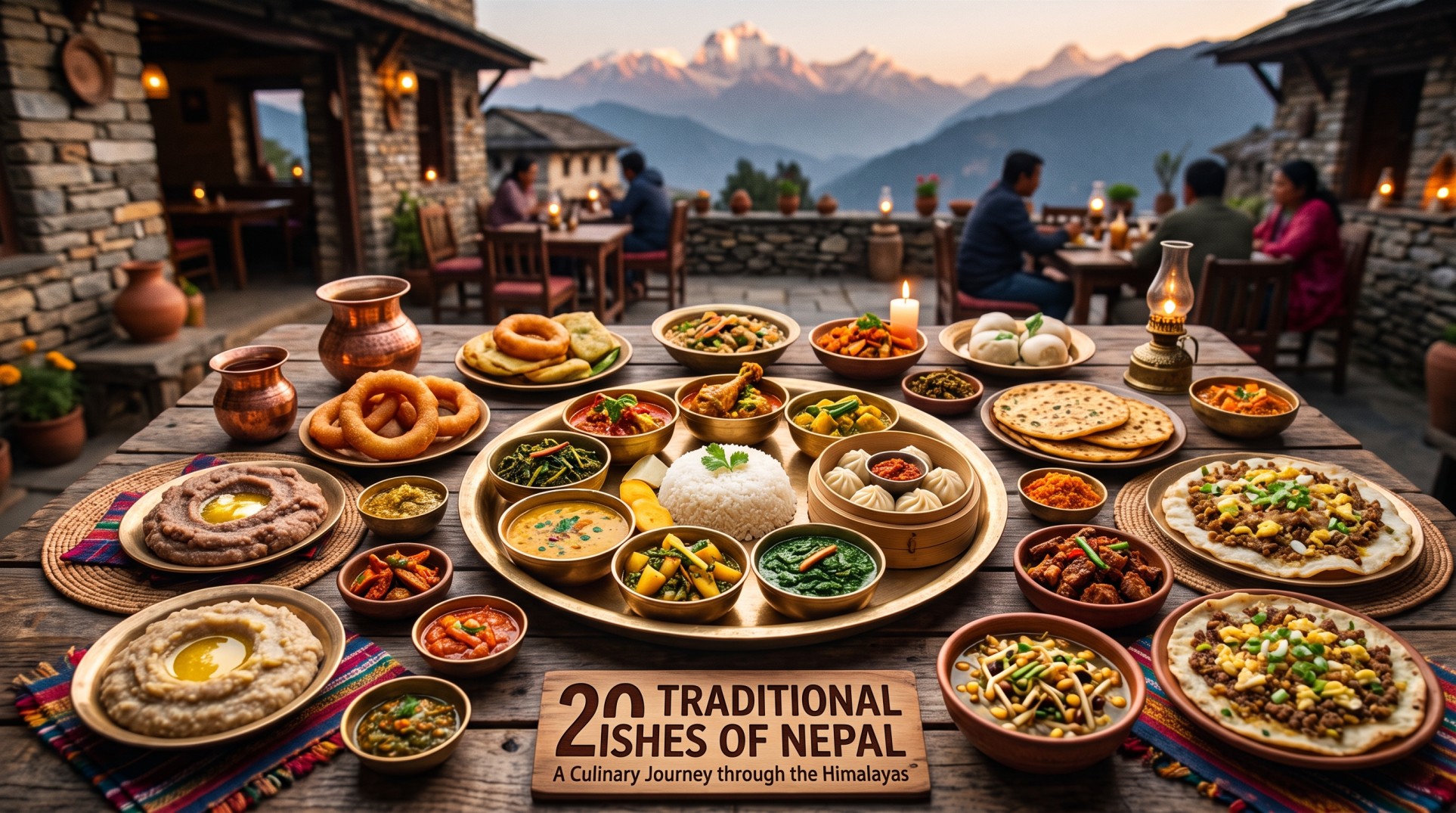
If you want to understand how momo fits into the wider food culture of the country, it helps to look at the other dishes Nepalis eat daily, many of which are covered in this list of traditional dishes you should try in Nepal.
Momo originated in Tibet, as most food historians and culinary writers agree, developing as part of dumpling traditions that spread across the Tibetan Plateau and Central Asia over centuries. Nepal did not invent momo, but it is the country that turned it into a distinct culinary tradition and, eventually, a widespread favorite.
Tibetan traders and migrants carried momo into the Kathmandu Valley over generations of cross-Himalayan trade, long before Nepal’s borders looked as they do today. Newar communities in Kathmandu, Patan, and Bhaktapur, long known for an elaborate food culture of their own, adapted the dumpling with buffalo meat and local spice blends. Read more about this community’s broader culinary and cultural contributions in this overview of the Newar people and their traditions in Kathmandu.
China enters the story only indirectly: the dumpling family that includes jiaozi and baozi shares distant ancestry with momo through broader Central Asian and Himalayan trade influences, rather than through direct borrowing from Nepal or Tibet. The common claim that momo is “basically a Chinese dumpling” oversimplifies a longer, more tangled Himalayan food history. The fair summary is that momo is Tibetan in origin and distinctly Nepali in its modern identity, shaped by decades of local adaptation.
Momo became a favorite street food in Kathmandu because it is quick to cook, filling, and easy to sell from a small cart or modest shopfront. As the Kathmandu Valley urbanized through the second half of the twentieth century, momo spread from Tibetan and Newar kitchens into restaurants, bus stops, and school canteens across the city.
Several factors pushed momo toward everyday popularity:
Today, momo carts sit outside many schools and office blocks in Kathmandu, Pokhara, and other urban centers across Nepal’s provinces, and it is common to see families, office workers, and tourists sharing the same plate.
Nepal’s main momo styles differ mainly in cooking method and sauce: jhol momo swims in a warm, tangy soup, C momo is pan-fried and tossed in a spicy sauce, kothey momo is pan-seared on one side, and fried momo is deep-fried until crisp. Each style tends to suit a different setting rather than a strict region.
Jhol momo is especially associated with the Kathmandu Valley, where steamed dumplings are bathed in a sesame-and-tomato based “jhol” (meaning broth or gravy in Nepali), often served at room temperature. C momo, sometimes called “chilly momo” in casual speech, became popular in urban fast-food joints and reflects the fusion of Nepali street food with Indo-Chinese flavors. Kothey momo, pan-fried on the base and steamed on top, is a textural favorite at traditional momo houses, while fully fried momo is common as a quick snack or party appetizer.
| Style | Cooking Method | Typical Setting | Flavor Profile |
|---|---|---|---|
| Jhol Momo | Steamed, served in broth | Kathmandu Valley street stalls | Tangy, sesame-tomato, mildly spicy |
| C Momo | Pan-fried, tossed in sauce | Urban fast-food and Indo-Chinese restaurants | Spicy, saucy, chili-garlic forward |
| Kothey Momo | Pan-seared base, steamed top | Traditional momo houses | Crisp bottom, juicy filling |
| Fried Momo | Deep-fried | Snack stalls, parties | Crunchy exterior, rich filling |
A traditional Nepali momo is made of a simple wheat-flour dough wrapped around a filling of minced buffalo meat, onion, garlic, ginger, and a blend of spices such as cumin, coriander, and timur, the Nepali Sichuan-style pepper. Chicken, pork, and vegetable fillings are also widely available, especially in tourist areas and vegetarian households.
Buffalo meat, often labeled “buff” on menus, remains a classic choice in the Kathmandu Valley partly because cow slaughter is illegal in Hindu-majority Nepal, which makes buffalo one of the most common red meats. Vegetable momo, filled with finely chopped cabbage, carrot, paneer, or mushroom, has grown popular among vegetarians and tourists, and most momo houses now offer it alongside meat versions. Cheese momo and other fusion fillings have also appeared in recent years, reflecting momo’s flexibility as a format rather than a fixed recipe.
Because momo is a cousin of other stuffed and staple foods found across Nepal, readers curious about the country’s wider food identity may also want to compare it with the dish long considered the everyday meal, dal bhat, discussed in this piece on dal bhat as Nepal’s national dish.
The achar, a spicy tomato-based dipping sauce, is often what distinguishes a forgettable plate of momo from a memorable one. A good achar typically blends roasted tomatoes, garlic, chili, and sesame or peanut into a smoky, tangy paste that complements the plain dough and mild filling.
Many momo shops guard their own achar recipe, and regulars often choose where to eat based on the sauce as much as the dumpling itself. Some versions are thin and soupy, closer to a chutney, while others are thick and nearly paste-like. This variation is part of why asking a Kathmandu local “where’s the best momo” usually gets a strong, specific opinion rather than a shrug.
Dal bhat remains Nepal’s most-eaten daily meal and is often described as the country’s staple food, but momo is widely seen as Nepal’s favorite dish in terms of popularity and cultural identity, especially among younger, urban Nepalis. Dal bhat is what most Nepalis eat for lunch and dinner at home; momo is what they crave, celebrate with, and serve to guests as a treat.
This distinction matters because momo was never a staple grain-based meal the way dal bhat is. Instead, it occupies the cultural space of comfort food and celebration food, eaten at birthday parties, after exams, during office breaks, and on casual outings in Kathmandu. No single dish has been officially declared Nepal’s national dish by the government, but momo consistently comes up first in casual conversations about favorite foods.
The best momo in Nepal is often found not in famous restaurants but in small, long-running momo houses in Kathmandu’s older neighborhoods, alongside reliable street carts in Pokhara and other cities. Areas like Thamel, New Road, and the narrow lanes around Ason in Kathmandu are known for dense clusters of momo shops, each with loyal regulars.
Because momo is sold everywhere from hotel menus to roadside carts, hygiene and quality vary widely, so it is worth choosing busy, well-reviewed spots rather than quiet, empty-looking ones.
Momo’s journey, from Tibetan trade routes to Newar kitchens to today’s Kathmandu street corners, tells a bigger story about how Himalayan cultures borrow, adapt, and reinvent food across generations. Trying different styles, jhol, C, kothey, and fried, is one of the simplest ways to taste that history on a single plate. Explore more of Nepal’s food traditions, and share your own favorite momo spot or memory in the comments below.
Momo is a Himalayan dumpling made of thin wheat dough filled with minced meat or vegetables, then steamed, fried, or simmered. It differs from Chinese dumplings like jiaozi in its spice blend, dough thickness, and the spicy achar sauce served alongside it, which gives Nepali momo a distinct flavor identity.
Momo originated in Tibet and traveled into Nepal through centuries of Himalayan trade. Nepal did not invent the dumpling, but Newar and Tibetan communities in the Kathmandu Valley adapted it so thoroughly that it became a distinct Nepali dish, which is why both countries have legitimate claims to its identity today.
Jhol momo is steamed dumplings served in a tangy, sesame-and-tomato based broth called jhol, usually at room temperature. It became popular in Kathmandu because the sauce adds moisture and tang to plain steamed dumplings, making it a distinct Newar-influenced style found mainly in the Kathmandu Valley.
Traditional Nepali momo most often uses minced buffalo meat, since cow slaughter is illegal in Hindu-majority Nepal. Chicken, pork, and vegetable fillings such as cabbage, carrot, or paneer are also common today, especially in restaurants catering to vegetarians and tourists.
Yes, vegetable momo is widely available across Nepal, filled with ingredients like cabbage, carrot, paneer, or mushroom. Most momo houses, from street carts to restaurants, offer a vegetarian option alongside meat versions, making it easy for vegetarian travelers to enjoy the dish.
In Kathmandu, neighborhoods like Thamel, New Road, and the lanes around Ason have dense clusters of long-running momo shops favored by locals. In Pokhara, smaller family-run eateries away from the main lakeside tourist strip often serve more traditional, freshly made momo.
Featured image: Photo by Angela Roma on Pexels

Airports in Nepal: The Complete Tourist Guide (2026 Updated) Nepal has 55 airports in total, but as a tourist, […]
Everyday Nepali food: what people actually eat Start here. These six are the backbone of the national diet, eaten […]
Nepalfacts 09 minutes read 47 views Discover where snow leopard Nepal populations actually live, from Dolpo to Mustang, realistic sighting odds, and the best treks to explore their habitat.
How Nepal Chooses a Living Goddess The five stages of selecting the Royal Kumari of Kathmandu […]